
If you’re over 50 and your knee has started talking to you every time you climb stairs or stand up from a chair, you’re not imagining things. Knee pain like this is one of the most common complaints doctors see in older adults, and in most cases, the cause has a name: osteoarthritis.
It’s not a rare condition. It’s not something that only happens to “unlucky” people. It’s wear and tear that adds up over decades of walking, standing, and carrying your own body weight, and for a lot of people, it eventually reaches a point where ordinary movement starts to hurt.
The good news is that treatment for osteoarthritis has moved well beyond “take a painkiller and rest.” Regenerative therapy is now offering people a way to manage this pain without surgery, and for many patients, that’s a genuinely different path forward.
Book a Consultation: https://acrtbd.com/contact/
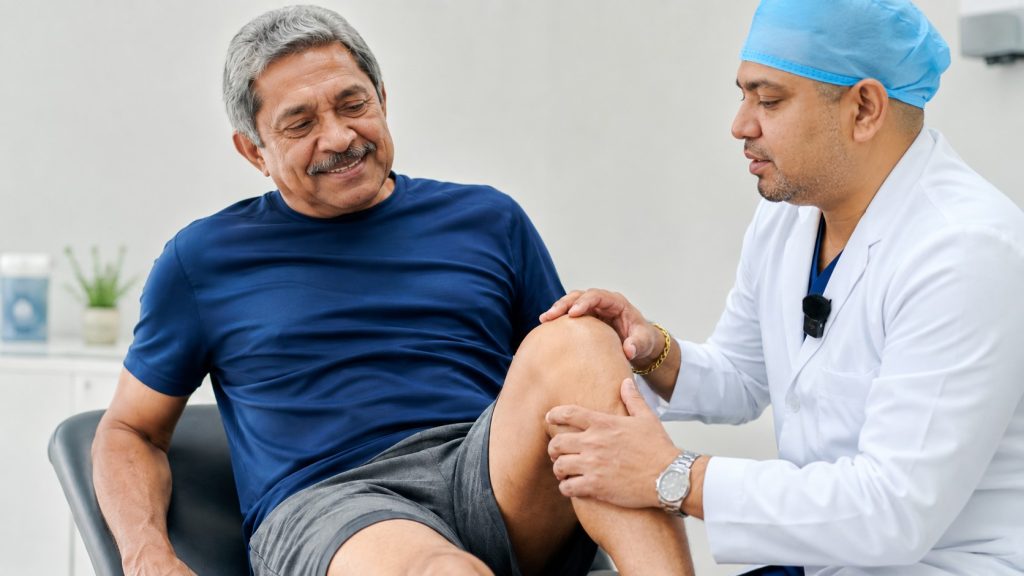
What Osteoarthritis Actually Is
Every joint in your body relies on cartilage, that smooth, cushiony tissue that lets bones move against each other without grinding. In the knee, cartilage acts like a shock absorber, softening the impact every time you walk, run, or climb.
Osteoarthritis happens when this cartilage wears down. As it thins, the bones underneath lose their cushioning and start rubbing more directly against each other. That’s what causes the stiffness, swelling, and pain that people associate with “bad knees.”
Age is the biggest factor. As you get older, the cartilage in your joints naturally loses some of its water content and elasticity, making it more prone to damage. But age isn’t the only thing at play.
What Puts Extra Stress on Your Knees
A few factors tend to speed up cartilage breakdown:
- Excess body weight. Your knees carry your full body weight every time you stand or walk. If you weigh 100 kg and you’re around 50 years old, that’s two to three decades of your knees absorbing extra load with every step. Over time, that adds up to real wear.
- Old injuries. A past injury to the knee, especially one that damaged the cartilage or the joint’s soft tissue, doesn’t always heal cleanly. Even if it feels fine years later, that area can be more vulnerable to arthritis down the line.
- Joint instability. If the fluid or tissue that normally keeps your joint stable breaks down, the space between the bones narrows. Less space means more friction, and more friction means more damage over time.
None of these factors act alone. Usually it’s a combination, age plus weight, or an old injury plus years of daily use, that eventually tips a joint into osteoarthritis.
How to Tell If It’s Osteoarthritis
Osteoarthritis doesn’t usually show up overnight. It tends to build gradually, and the signs are fairly consistent from one patient to the next:
- Pain in the knee, especially when you’re walking or putting weight on it
- A feeling of warmth when you touch the joint
- Stiffness or difficulty fully bending the knee
- A sense that fluid has built up inside the joint
- Trouble getting up from a low seat, or difficulty going up and down stairs
- The joint changing shape over time
- A grinding or popping sound when you move the knee
If a few of these sound familiar, it’s worth getting the joint properly evaluated rather than waiting for it to get worse on its own.
Why Catching It Early Matters
Osteoarthritis is a long-term condition, and left untreated, it doesn’t stay the same. It tends to worsen gradually, and for some patients, it eventually leads to a permanently frozen or severely limited joint.
The upside is that early-stage osteoarthritis often responds well to non-surgical treatment. Lifestyle changes, the right physiotherapy, and consistent movement can make a real difference for a lot of patients. A specialist will typically recommend some combination of rest when needed, physiotherapy, manual therapy or manipulation, therapeutic exercise, and modern regenerative options.
Timing matters here. The earlier a joint problem is properly diagnosed and treated, the better the odds of avoiding long-term damage or the need for more invasive procedures later on.
What Regenerative Therapy Offers
Regenerative therapy takes a different approach than simply managing symptoms. Rather than just controlling pain, treatments like Platelet-Rich Plasma (PRP), Focused Shockwave Therapy, and Viscosupplementation aim to support the joint’s own tissue and encourage genuine repair.
The general idea across these treatments is similar: improve blood flow to the joint, support the regeneration of the tissue that’s wearing down, and reduce inflammation. That combination is what allows a lot of patients to see real improvement in both pain and mobility over time.
- Viscosupplementation involves injecting hyaluronic acid, a lubricant your joint naturally produces, directly into the knee. This helps reduce friction between the bones and can noticeably improve how smoothly the joint moves.
- Extracorporeal Focused Shockwave Therapy (ESWT) uses controlled shockwaves to stimulate blood flow and encourage the body’s own healing response in the affected area.
- Platelet-Rich Plasma (PRP) therapy uses concentrated platelets from your own blood, rich in growth factors, to support tissue repair and reduce inflammation in the joint.
These treatments don’t work instantly. Most patients need a series of sessions, often spread across three weeks to a month, and it can take some time before the full benefit becomes noticeable. But for many people who’ve been told surgery is their only remaining option, this is a real alternative worth exploring, particularly when the joint is caught before the damage becomes severe.
Who Should You Talk To
If your knee pain has been building for a while, the first real step is getting it looked at by someone qualified to assess joint damage and recommend the right course of treatment. A trained physiotherapist or regenerative therapy practitioner can evaluate how advanced the condition is and whether treatments like PRP, ESWT, or Viscosupplementation are a good fit for your specific case.
About the writer: This article draws on the clinical expertise of Mr. Shamsul Hoque Nadim, a physiotherapist (BPT, Dhaka University) and certified regenerative therapy practitioner with the International Society of Medical Shockwave Treatment (ISMST), New Zealand. He is the consultant at Advanced Centre For Regenerative Therapy (ACRT BD), a Dhaka-based clinic specializing in regenerative treatment for chronic joint pain and men’s health conditions.
For consultations or more information, visit acrtbd.com or reach the clinic via WhatsApp at +8801977656237.
This article is intended for educational purposes and does not replace a medical consultation. If you’re experiencing persistent knee pain, please speak with a qualified physiotherapist or regenerative therapy specialist before starting any treatment.
Book a Consultation: https://acrtbd.com/contact/