If you’ve been living with joint or muscle pain for more than three months, you’re dealing with what doctors classify as chronic pain, not just a stubborn injury that hasn’t healed yet. The International Association for the Study of Pain (IASP) draws the line at three months of persistent or recurring pain, and the World Health Organization’s ICD-11 now recognizes chronic pain as its own medical condition, not just a symptom tagging along with something else.
That distinction matters more than it sounds like it should. Acute pain is your body’s alarm system doing its job. Chronic pain is different. At some point the alarm stops helping and starts interfering with sleep, work, and basic daily movement. Painkillers alone rarely fix that, and a lot of people spend years bouncing between rest, medication, and vague advice to “give it time” before finding a clinic that actually treats the underlying issue.
If you’re searching for a chronic pain clinic near you right now, here’s what you actually need to know: what treatments exist, how they work, and what separates a clinic worth booking from one that’s just going to hand you more painkillers.
Book a Consultation: https://acrtbd.com/contact/
What Counts as Chronic Pain
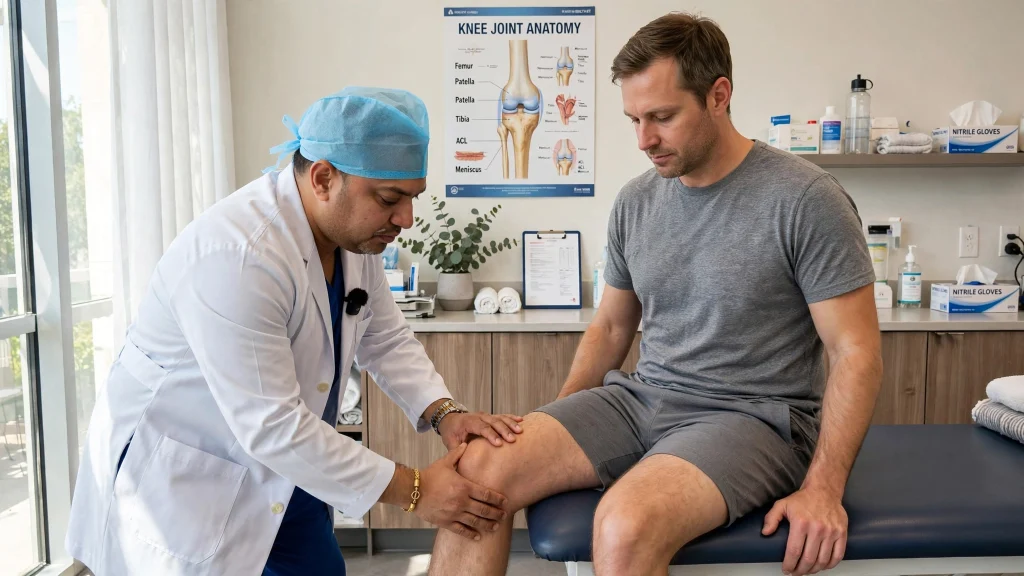
Chronic pain isn’t one condition. It’s a category that covers joint pain, nerve pain, and muscular pain that sticks around past the point where an injury should have healed. Common presentations include:
- Osteoarthritis of the knee – cartilage wearing down over time, often from age, body weight, or old injuries, leaving the joint bone-on-bone and inflamed.
- Frozen shoulder – stiffness and sharp pain that gradually limits how far you can move your arm, sometimes to the point where reaching behind your back becomes impossible.
- Plantar fasciitis – a stabbing pain under the heel, usually worst with the first few steps in the morning.
- Tennis elbow and golfer’s elbow – pain on the outside or inside of the elbow from repetitive strain on the tendons.
- Achilles tendinitis – pain and stiffness at the back of the heel, often from overuse or sudden increases in activity.
- Disc prolapse (PLID) – a herniated spinal disc pressing on nearby nerves, causing back pain that can radiate down the leg.
- Avascular necrosis of the hip (AVN) – reduced blood supply to the hip joint, causing bone tissue to weaken and, if untreated, collapse.
If you recognize your own symptoms in that list, the next question isn’t whether you should get treatment. It’s which treatment actually fits your condition, and that’s where a lot of people get stuck.
Non-Surgical Treatment Options That Actually Work
Surgery isn’t the only path forward for chronic pain, and for a lot of conditions it isn’t even the first one worth trying. Regenerative and non-invasive therapies have advanced enough that many patients see real improvement without going under the knife. Here’s a breakdown of the four main options in current use.
| Treatment | How It Works | Best For | Is It Painful? |
|---|---|---|---|
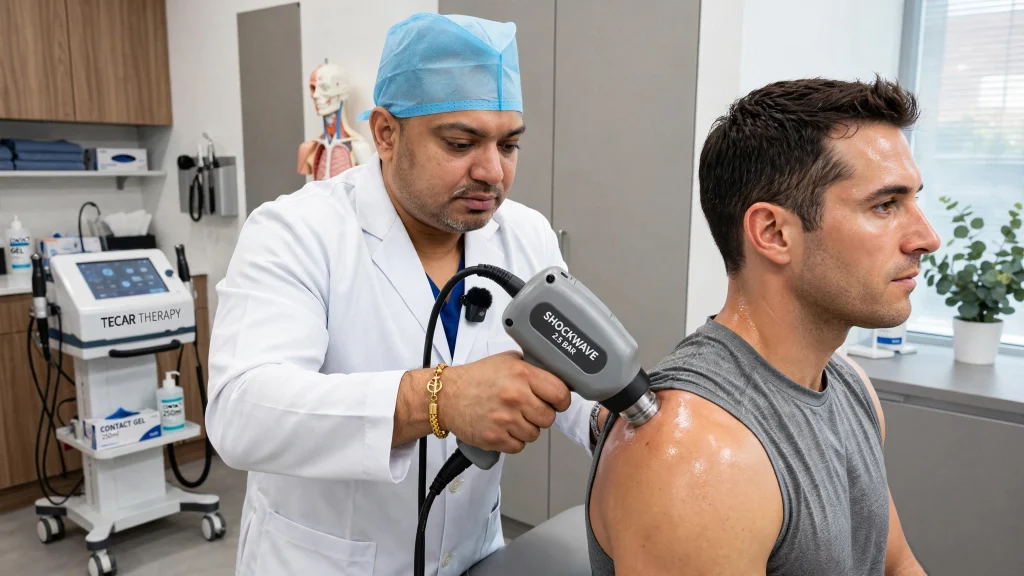
| Extracorporeal Shockwave Therapy (ESWT) | Delivers low-intensity shockwaves to the affected tissue, creating controlled micro-trauma that triggers new blood vessel growth and healing | Tendon and soft tissue conditions like plantar fasciitis, tennis elbow, Achilles tendinitis | Generally well tolerated; some mild discomfort during the session |
| TECAR Radiofrequency | Uses high-frequency currents (300 KHz to 1 MHz) in two modes: capacitive for soft tissue, resistive for bone and joints | Muscle, tendon, and joint pain where deeper tissue heating helps | Non-invasive and typically painless |
| Platelet-Rich Plasma (PRP) | Concentrates platelets from your own blood and injects them into the injured area to stimulate tissue repair | Joint and tendon injuries, including knee osteoarthritis | Mild discomfort from the injection itself |
| Viscosupplementation | Injects hyaluronic acid, a natural joint lubricant, directly into the joint to reduce friction | Knee osteoarthritis specifically | Mild discomfort from the injection |
None of these require an incision or a hospital stay. The mechanism behind most of them is the same basic principle: stimulate the body’s own repair process (angiogenesis, new blood vessel formation, controlled inflammation) rather than masking pain with medication or replacing tissue surgically.
That said, no single treatment fits every condition. A frozen shoulder and a herniated disc don’t respond the same way to the same protocol, which is exactly why the assessment before treatment matters as much as the treatment itself.
How Long Until You See Results
This varies by condition and severity, but most patients notice initial improvement within a few weeks of starting treatment, with fuller benefits building over several sessions. If a clinic promises instant, permanent relief after one visit, that’s a red flag rather than a good sign. Real tissue healing takes time, even with regenerative approaches.
5 Things to Check Before Booking a Chronic Pain Clinic
Not every clinic advertising “regenerative therapy” or “pain treatment” operates the same way. Before you book, it’s worth checking:
- Practitioner credentials. Look for physiotherapy or medical qualifications, plus certification from a recognized body in the specific treatment being offered (for example, shockwave therapy certification through an organization like the International Society of Medical Shockwave Treatment, ISMST).
- Whether they diagnose before they treat. A clinic that jumps straight to a treatment without asking about onset, history, or examining the joint is guessing, not diagnosing.
- Transparency about the treatment itself. You should be able to get a plain-language explanation of what the treatment does and why it’s the right fit for your specific condition, not just a brand name.
- Non-surgical options on the table. If every conversation leads straight to surgery without discussing alternatives first, get a second opinion.
- A follow-up and monitoring process. Chronic pain treatment isn’t usually one-and-done. A clinic that checks in and adjusts your plan as you progress is a better sign than one that sends you home after a single session.
What a Proper Consultation Should Look Like
A first visit for chronic pain should follow a clear structure, not a rushed five-minute chat before a prescription. Here’s what that process typically involves at a well-run clinic:
Step 1: Discuss your symptoms. You explain what hurts, when it started, what makes it worse, and what you’ve already tried. This is also where you’d mention things like whether pain wakes you up at night or limits specific movements, since these details help narrow down the cause.
Step 2: Meet the practitioner and get examined. A physical assessment of the joint or affected area, sometimes alongside imaging like X-rays or MRI if the condition warrants it, to confirm what’s actually going on before recommending anything.
Step 3: Receive a personalized care plan. Based on the diagnosis, not a one-size-fits-all package. The plan should explain which treatment (or combination) fits your condition and roughly how many sessions to expect.
Step 4: Ongoing support and adjustment. Progress gets monitored, and the plan gets adjusted if something isn’t working the way it should.
If a clinic skips straight from “what hurts” to “here’s your treatment” without a real assessment in between, that’s worth questioning.
Common Mistakes People Make With Chronic Pain
A few patterns show up again and again with chronic pain, and they’re worth avoiding:
- Waiting too long before seeking treatment. Pain that’s dismissed as “just getting older” or “just stress” for years often gets harder to treat the longer it’s left unaddressed.
- Relying only on painkillers. Medication can manage symptoms temporarily, but it doesn’t address what’s actually damaging the joint or tissue.
- Assuming surgery is the only real option. For many of the conditions listed above, non-surgical regenerative treatments are worth exploring first.
- Skipping the diagnostic step. Treating symptoms without confirming the underlying cause means you might be treating the wrong thing entirely.
- Stopping treatment too early. Since these therapies work by stimulating your body’s own healing process, results build over several sessions, not overnight.
Is Regenerative Therapy Safe?
These treatments use minimally invasive methods, and several (like PRP) work by using your own body’s biological material rather than introducing foreign substances. That said, “minimally invasive” doesn’t mean “risk-free” or “guaranteed.” Results depend on the severity of the condition, how long it’s been present, and individual response to treatment. A trustworthy clinic will be upfront about what to realistically expect rather than promising universal results.
Finding Chronic Pain Treatment in Dhaka
If you’re based in Dhaka and dealing with any of the conditions covered here, the Advanced Centre for Regenerative Therapy (ACRT BD) in Baridhara DOHS, Gulshan, treats chronic pain using Extracorporeal Shockwave Therapy, TECAR Radiofrequency, Viscosupplementation, and PRP therapy, under the care of Mr. Shamsul Hoque Nadim, a physiotherapist (BPT, Dhaka University) and certified member of the International Society of Medical Shockwave Treatment (ISMST).
You can read more about the specific treatments here:
- Extracorporeal Focused Shockwave Therapy
- TECAR Radiofrequency
- Viscosupplementation
- Platelet-Rich Plasma (PRP)
- Knee pain and joint conditions in depth
- More about the practice and practitioner
Ready to Get Assessed?
If you’ve been dealing with joint or muscle pain for months and painkillers aren’t cutting it anymore, the next step isn’t more waiting. It’s getting an actual assessment of what’s causing the pain and which treatment fits it.
Message ACRT BD directly on WhatsApp at 01977656237 to ask questions or book a consultation. You’ll be speaking with the practitioner directly, not a call center.
Book a Consultation: https://acrtbd.com/contact/