ইরেকশনের সমস্যা কি সবসময় রক্তনালীর কারণে হয়?

বেশিরভাগ পুরুষ যখন ইরেকশনে সমস্যা অনুভব করেন, তখন প্রথমেই মাথায় আসে — “রক্ত চলাচল কম হচ্ছে বোধহয়।” এই ধারণাটা একেবারে ভুলও না। কারণ অনেক ক্ষেত্রে সত্যিই রক্তনালীর সমস্যা থাকে। কিন্তু সবসময় না। ইরেক্টাইল ডিসফাংশন (ED) আসলে বেশ কয়েকটি ভিন্ন কারণে হতে পারে। আর কারণটা কী সেটা জানা গুরুত্বপূর্ণ — কারণ এক কারণের চিকিৎসা অন্য কারণে কাজ নাও করতে পারে। সহজ ভাষায় পুরো বিষয়টা বুঝে নেওয়া যাক। ইরেকশন আসলে কীভাবে কাজ করে? পুরো প্রক্রিয়াটাকে একটা পাম্প সিস্টেমের মতো ভাবুন। যৌন উত্তেজনা অনুভব করলে মস্তিষ্ক নার্ভের মাধ্যমে একটা সংকেত পাঠায়। সেই সংকেত পৌঁছায় লিঙ্গের রক্তনালীতে। রক্তনালীগুলো প্রসারিত হয়, রক্ত ঢুকতে শুরু করে দুটো স্পঞ্জের মতো টিস্যুতে — আর তখনই ইরেকশন হয়। এই পুরো প্রক্রিয়ার জন্য দরকার: এই পাঁচটির যেকোনো একটিতে সমস্যা হলেই ইরেকশনে সমস্যা দেখা দিতে পারে। তাই ইরেক্টাইল ডিসফাংশনের কারণগুলো আসলে বেশ বৈচিত্র্যময়। হ্যাঁ, রক্তনালীর সমস্যা সবচেয়ে সাধারণ কারণ স্পষ্ট করে বলা দরকার: শারীরিক কারণগুলোর মধ্যে রক্তনালীর সমস্যাই সবচেয়ে বেশি দেখা যায়। উচ্চ রক্তচাপ, ডায়াবেটিস, উচ্চ কোলেস্টেরল, বা ধমনীতে চর্বি জমলে লিঙ্গের ছোট ছোট রক্তনালীতে পর্যাপ্ত রক্ত যেতে পারে না। এই কারণেই অনেক সময় বলা হয়, ED আসলে হৃদরোগের আগাম সংকেত হতে পারে। যে প্রক্রিয়ায় হার্টের ধমনী ক্ষতিগ্রস্ত হয়, সেই একই প্রক্রিয়ায় লিঙ্গের ছোট রক্তনালীও ক্ষতিগ্রস্ত হয় — অনেক সময় হার্ট অ্যাটাকের বছরখানেক আগে থেকেই। তাই ৪০ বছরের বেশি বয়সী, ডায়াবেটিস বা উচ্চ রক্তচাপ আছে এমন পুরুষদের ক্ষেত্রে রক্তনালীই প্রথমে দেখার বিষয়। ইরেক্টাইল ডিসফাংশনের চিকিৎসা নিয়ে আরো জানতে পারবেন আমাদের বিস্তারিত পেজে। কিন্তু আরো চারটি বড় কারণ আছে ১. নার্ভের সমস্যা (Neurogenic ED) পুরো ইরেকশন প্রক্রিয়াটা নার্ভের মাধ্যমে নিয়ন্ত্রিত হয়। ডায়াবেটিস দীর্ঘমেয়াদে পেরিফেরাল নার্ভ নষ্ট করে দেয়। এছাড়া মেরুদণ্ডে আঘাত, প্রোস্টেটের অপারেশন, বা মাল্টিপল স্ক্লেরোসিস — এসব কারণে নার্ভ ক্ষতিগ্রস্ত হলে রক্তনালী সুস্থ থাকলেও ইরেকশন হয় না। ডায়াবেটিস রোগীদের অনেকের ক্ষেত্রে নার্ভ এবং রক্তনালী — দুটোতেই সমস্যা থাকে একসাথে। ২. হরমোনের সমস্যা (Hormonal ED) টেস্টোস্টেরন কম হওয়া সবচেয়ে পরিচিত হরমোন কারণ। কিন্তু এটাই একমাত্র না। প্রোল্যাকটিন হরমোন বেশি হলে, থাইরয়েডের সমস্যায়, বা কর্টিসল লেভেল এলোমেলো হলেও ইরেকশনে সমস্যা হতে পারে। হরমোন ঠিক না করে শুধু রক্তপ্রবাহ বাড়ানোর চেষ্টা করলে কাজ হবে না। ৩. মানসিক কারণ (Psychogenic ED) এই কারণটাকে মানুষ অনেক সময় ছোট করে দেখে। কিন্তু স্ট্রেস, উদ্বেগ, বিষণ্নতা, সম্পর্কের টানাপোড়েন, পারফরম্যান্স অ্যাংজাইটি, পুরনো মানসিক আঘাত — এগুলো মস্তিষ্কের “সংকেত পাঠানোর” ক্ষমতায় সরাসরি হস্তক্ষেপ করে। তরুণ বয়সে ED হলে বেশিরভাগ ক্ষেত্রে মানসিক কারণই প্রধান। তরুণ পুরুষদের মধ্যে ইরেক্টাইল ডিসফাংশন নিয়ে আলাদা পেজে বিস্তারিত তথ্য রয়েছে। ৪. কাঠামোগত সমস্যা (Structural) পেরোনি’স ডিজিজ নামে একটা অবস্থায় লিঙ্গের ভেতরে দাগ বা ক্ষত টিস্যু তৈরি হয়। এতে ইরেকশনের সময় বাঁকা হয়ে যায় এবং ব্যথা হয়। এটা রক্তনালী, নার্ভ বা হরমোনের সাথে কোনো সম্পর্ক নেই — এটা সম্পূর্ণ কাঠামোগত সমস্যা। বেশিরভাগ ক্ষেত্রেই একাধিক কারণ একসাথে থাকে এটা অনেকেরই জানা নেই: অনেক পুরুষের একসাথে একাধিক কারণে ED হয়। ধরুন, ৫০ বছরের একজন পুরুষের হালকা রক্তনালীর পরিবর্তন আছে, সেইসাথে কাজের চাপ আছে, আর টেস্টোস্টেরনও একটু কম। শুধু একটা কারণ ঠিক করলে পুরোপুরি ভালো হবে না। তাই ED-র লক্ষণগুলো জানাটা শুরুর পদক্ষেপ, কিন্তু সঠিক মূল্যায়ন ছাড়া সঠিক চিকিৎসা নির্ধারণ করা যায় না। চিকিৎসার ক্ষেত্রে এটা কেন গুরুত্বপূর্ণ? ED যদি রক্তনালীর কারণে হয়, তাহলে ফোকাসড শকওয়েভ থেরাপি সরাসরি পেনাইল টিস্যুতে নতুন রক্তনালী তৈরি করে — ওষুধ বা অপারেশন ছাড়াই। কিন্তু সমস্যা যদি মূলত হরমোনের হয়, তাহলে আগে হরমোন ঠিক করতে হবে। মানসিক কারণ থাকলে কাউন্সেলিং লাগবে। কাঠামোগত সমস্যায় আলাদা পদ্ধতি। ভুল কারণের জন্য ভুল চিকিৎসা নিলে ফলাফল আসে না — এটা সহজ হিসেব। ACRT BD-তে রিজেনারেটিভ থেরাপি প্র্যাকটিশনার Mr. Shamsul Hoque Nadim প্রতিটি রোগীকে আলাদাভাবে মূল্যায়ন করেন। কারণ খুঁজে বের করার পরেই চিকিৎসার পরামর্শ দেওয়া হয়। এক নজরে কারণগুলো কারণ কী হচ্ছে সাধারণ লক্ষণ রক্তনালীর সমস্যা পেনিসে রক্ত পৌঁছাচ্ছে না বয়স ৪০+, ডায়াবেটিস, উচ্চ রক্তচাপ নার্ভের সমস্যা সংকেত পৌঁছাচ্ছে না ডায়াবেটিস, মেরুদণ্ডে সমস্যা হরমোনের সমস্যা টেস্টোস্টেরন বা অন্য হরমোন কম শক্তি কমা, যৌন ইচ্ছা কমা মানসিক কারণ মস্তিষ্ক সংকেত পাঠাচ্ছে না স্ট্রেস, উদ্বেগ, তরুণ বয়স কাঠামোগত লিঙ্গে দাগ টিস্যু ব্যথা, বাঁকা হওয়া, পেরোনি’স এখন কী করবেন? ইরেকশনে সমস্যা যদি মাঝে মাঝে হচ্ছে, বা নিয়মিত হচ্ছে — প্রথম কাজ হলো সঠিক মূল্যায়ন করানো। শুধু ধরে নেওয়া নয় যে রক্ত কম যাচ্ছে, আর একটা ওষুধ খেয়ে নেওয়া। কারণটা ঠিকমতো বোঝা গেলেই সঠিক সমাধান সম্ভব। ঢাকায় নন-সার্জিক্যাল ED চিকিৎসা সম্পর্কে জানুন, অথবা ACRT BD-তে যোগাযোগ করুন পরামর্শের জন্য।
Is Erectile Dysfunction Always Caused by Blood Vessel Problems?

Most men who start having erection problems assume it’s a blood flow issue. And honestly, that’s a fair guess — because a lot of the time, it is related to blood vessels. But here’s the thing: not always. Erectile dysfunction (ED) has several different causes, and understanding which one is driving your problem actually matters a lot. Because the treatment that works for one cause might do nothing for another. Let’s break this down in plain language. How an Erection Actually Works Think of it like a simple pump system. When you’re sexually aroused, your brain sends a signal down through your nerves to the blood vessels in your penis. Those vessels relax and open up, allowing blood to rush in and fill two sponge-like chambers. That’s what creates an erection. For this to work properly, you need: If any one of those steps breaks down, you can end up with ED. That’s why the causes of ED are actually quite varied. Yes, Blood Vessels Are a Very Common Cause Let’s be clear: vascular (blood vessel) problems are the most common physical cause of ED. When the small arteries in the penis can’t deliver enough blood — due to plaque buildup, high blood pressure, high cholesterol, or diabetes — getting and keeping an erection becomes difficult. This is also why ED is sometimes called an early warning sign for heart disease. The same process that silently damages your coronary arteries can also affect the smaller vessels in your penis — often years before a heart attack shows up. So yes, if you’re a man over 40 with ED and you also have high blood pressure or diabetes, blood vessels are the first thing a practitioner will look at. You can read more about erectile dysfunction treatment options that address vascular causes directly. But There Are Four Other Major Causes 1. Nerve Problems (Neurogenic ED) Your nervous system controls the whole process. If there’s damage to the nerves involved — from diabetes (which damages peripheral nerves over time), a spinal cord injury, multiple sclerosis, or even surgery near the prostate — erections can fail even when blood vessels are completely healthy. Men with diabetes often deal with both nerve damage and blood vessel damage at the same time, which makes things more complicated. 2. Hormone Imbalances (Hormonal ED) Low testosterone is probably the most talked-about hormonal cause, but it’s not the only one. High levels of prolactin (a hormone usually associated with breastfeeding, but men produce it too), thyroid problems, or issues with cortisol can all interfere with erections. If your hormone levels are off, no amount of blood flow improvement will fully fix the problem. 3. Psychological Causes (Psychogenic ED) This one gets underestimated a lot. Stress, anxiety, depression, relationship problems, performance anxiety, past trauma — these can all interfere with the brain’s ability to send the “go” signal. The brain is, in many ways, the most important sex organ. Psychogenic ED is especially common in younger men. A man in his 20s or 30s dealing with ED is more likely to have a psychological component than a vascular one. You can learn more about ED in young men and how it tends to differ. 4. Structural Problems Some men have a condition called Peyronie’s disease, where scar tissue forms inside the penis, causing it to curve painfully and making erections difficult or impossible. This is a physical, structural cause that has nothing to do with blood flow, nerves, or hormones. Most ED Is “Mixed” — More Than One Cause at Once Here’s something important that often gets missed: many men have ED from more than one cause at the same time. A 50-year-old man with mild blood vessel changes, some work stress, and slightly low testosterone isn’t going to be fully helped by just addressing one of those things. That’s why proper assessment matters. Knowing the symptoms of ED is a starting point, but figuring out why it’s happening requires a real look at the full picture. Why This Matters for Treatment If your ED is vascular, treatments like focused shockwave therapy are designed specifically to regenerate blood vessels in the penile tissue — stimulating new vessel growth and improving blood flow at the source. This is a non-medication, non-surgical approach that works well for vascular and mild neurogenic ED. If your ED is primarily hormonal, hormone work needs to happen first. If it’s psychological, talk therapy or counseling should be part of the plan. If it’s structural, a different approach applies. Taking a pill or getting a procedure designed for vascular ED when your real problem is anxiety or a hormone issue won’t give you the results you’re hoping for. That’s not how it works. At ACRT BD, Mr. Shamsul Hoque Nadim (Regenerative Therapy Practitioner, BPT — Dhaka University, ISMST Certified) evaluates each person individually before recommending any treatment. The goal is to understand your specific cause, not just apply the same solution to everyone. A Simple Way to Think About It Cause What’s Going Wrong Key Signals Vascular Poor blood flow to the penis Age 40+, high BP, diabetes, high cholesterol Neurogenic Nerve signals not reaching the penis Diabetes, spinal issues, prostate surgery Hormonal Low testosterone or hormone imbalance Low energy, reduced libido, muscle loss Psychogenic Brain blocking the signal Stress, anxiety, depression, younger age Structural Physical change in penile tissue Pain, visible curve, Peyronie’s disease What Should You Do? If you’ve been dealing with erection problems — whether it’s happening some of the time or most of the time — the first step is getting an honest assessment. Not just assuming it’s blood flow and grabbing a pill. Understanding what’s actually causing your ED is the fastest path to a real solution. Explore non-surgical ED treatment options available in Dhaka, or contact ACRT BD to schedule a consultation with Mr. Shamsul Hoque Nadim, a Regenerative Therapy Practitioner.
Best Chronic Pain Treatment Without Surgery in 2026
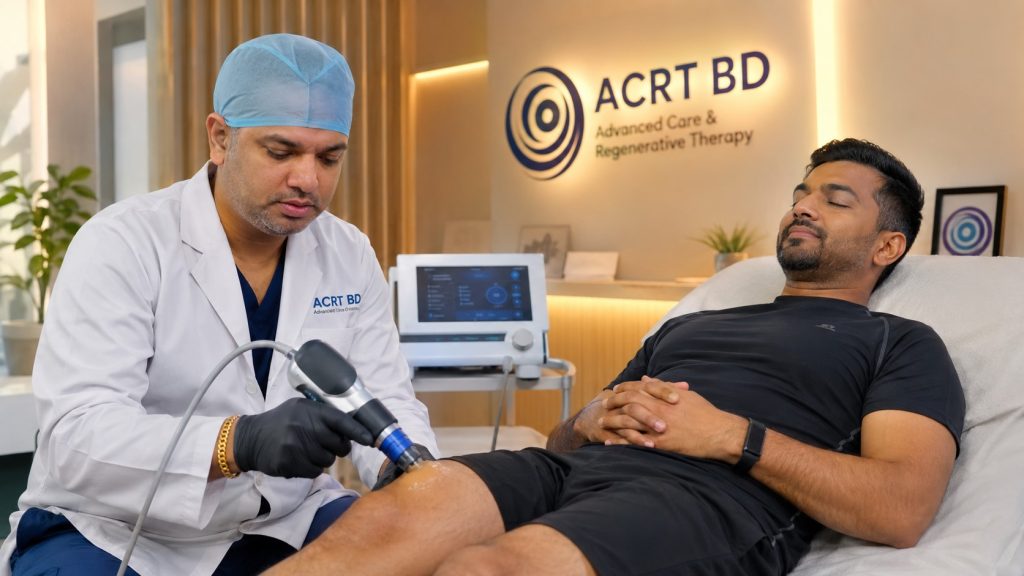
ACRT BD | Mr. Shamsul Hoque Nadim, a Regenerative Therapy Practitioner | Baridhara DOHS, Gulshan, Dhaka Pain that never really goes away is exhausting. You try painkillers for a few months. They help a little, but then the stomach problems start. Someone suggests surgery. But the recovery looks long, the risks feel scary, and honestly, you’re not even sure surgery is the right answer. Here’s the thing: for most types of chronic musculoskeletal pain, surgery is often not the first answer. And in 2026, the non-surgical options have gotten genuinely good. This article walks you through what actually works, what the science says, and how to figure out which treatment makes sense for your specific type of pain. What Is Chronic Pain, Exactly? Pain becomes “chronic” when it lasts more than 3 months. At that point, your nervous system has often rewired itself around the pain signal. The original injury may have healed, but the pain keeps coming back or never fully leaves. Common sources of chronic pain include: These conditions respond well to regenerative and physical therapies. Most people with these diagnoses do not need surgery. What they need is the right treatment, delivered at the right time. Why Many People Stay in Pain Too Long Most people with chronic pain follow a similar path: The problem is not that the treatments don’t exist. It’s that most people don’t know about the newer options, or they’re told surgery is the only “real” fix. That’s changing. The Best Non-Surgical Treatments for Chronic Pain in 2026 1. Focused Shockwave Therapy (FSWT) This is one of the most effective non-surgical treatments available right now for musculoskeletal pain. Shockwave therapy sends focused acoustic energy (sound waves) deep into damaged tissue. These waves trigger your body’s own healing response. Blood flow increases. Old scar tissue breaks down. Collagen production goes up. The tissue starts repairing itself. It’s particularly effective for: Clinical research consistently shows response rates of 70–80% for conditions like plantar fasciitis and calcific tendinitis with focused shockwave therapy. Studies published in journals like the Journal of Orthopaedic Research and BMC Musculoskeletal Disorders have confirmed its effectiveness. Sessions typically take 20–30 minutes. Most people need 3–6 sessions. There’s no downtime. You can go back to your normal routine the same day. At ACRT BD, we use Extracorporeal Focused Shockwave Therapy with medical-grade equipment specifically designed for musculoskeletal conditions. 2. Platelet-Rich Plasma (PRP) Therapy PRP uses your own blood to heal your own body. A small amount of blood is drawn, put in a centrifuge to concentrate the healing platelets, and then injected directly into the painful area. Platelets carry growth factors. Those growth factors stimulate tissue repair, reduce inflammation, and support new blood vessel formation in damaged areas. PRP works particularly well for: Multiple clinical trials have shown PRP to be more effective than corticosteroid injections for knee osteoarthritis pain over 6–12 months. Unlike steroids, which reduce pain temporarily but can damage cartilage over time, PRP supports actual tissue regeneration. It’s a one-time procedure or a short series of 2–3 injections. Recovery is minimal. Most patients notice improvement within 4–8 weeks. Learn more about Platelet-Rich Plasma (PRP) therapy at ACRT BD. 3. TECAR Radiofrequency Therapy TECAR (Transfer of Energy Capacitive and Resistive) is a deep-tissue therapy that uses electrical energy to heat tissue from the inside. Unlike a heating pad that warms only the surface, TECAR energy goes deep into muscles, tendons, and joints. This increases local circulation, speeds up cellular metabolism, and accelerates tissue recovery. It works well for: TECAR is often combined with manual therapy or exercise for better results. It’s painless, non-invasive, and most people describe it as a warm, comfortable sensation during the session. Explore TECAR Radiofrequency Therapy at ACRT BD. 4. Viscosupplementation (Hyaluronic Acid Injections) If you have knee osteoarthritis specifically, viscosupplementation is worth knowing about. Your knee joint naturally produces synovial fluid, which acts as a lubricant and shock absorber. In osteoarthritis, this fluid becomes thin and watery. Viscosupplementation replaces or supplements it with hyaluronic acid injections directly into the joint. Results vary by patient, but many people with mild-to-moderate knee OA experience significantly reduced pain and improved mobility for 6 months to a year from a single treatment course. It’s particularly useful when: We cover this in more detail in our article on knee osteoarthritis and heel pain treatment. See our Viscosupplementation page for more details. 5. Structured Physiotherapy and Exercise Rehabilitation This one might sound basic, but it’s foundational. Proper physiotherapy done consistently is still one of the most evidence-based treatments for chronic pain. The key word is “structured.” Random exercises you find online are not the same as a tailored rehabilitation program built around your specific condition, movement patterns, and strength deficits. For conditions like lower back pain, hip osteoarthritis, and shoulder issues, a structured 8–12 week exercise program can reduce pain by 40–60% and significantly improve function. The challenge is consistency and guidance. Physiotherapy works best when it’s supervised, progressively loaded, and combined with other treatments like TECAR or shockwave therapy when needed. Comparing Your Options Treatment Best For Sessions Needed Downtime Focused Shockwave Therapy Tendon pain, heel pain, calcification 3–6 None PRP Therapy Knee OA, tendon injuries, ligament issues 1–3 Minimal (1–2 days) TECAR Radiofrequency Muscle pain, stiffness, rehabilitation 5–10 None Viscosupplementation Knee OA specifically 1–3 None Physiotherapy All conditions (as foundation) 12–24 None What About Painkillers and Steroid Injections? Painkillers (NSAIDs like ibuprofen or naproxen) reduce inflammation and temporarily control pain. They’re not a treatment. They don’t fix the underlying problem. Long-term NSAID use is associated with stomach ulcers, kidney stress, and cardiovascular issues. Corticosteroid injections work similarly: fast relief, but they do nothing to repair tissue. Repeated steroid injections can actually weaken tendons and cartilage over time. Both have a place in short-term pain management, but neither is a solution for chronic pain. When Does Someone Actually Need Surgery? Surgery for musculoskeletal pain is appropriate when: For the vast majority of people presenting with chronic pain, none of these
অস্ত্রোপচার ছাড়া দীর্ঘস্থায়ী ব্যথার সেরা চিকিৎসা ২০২৬
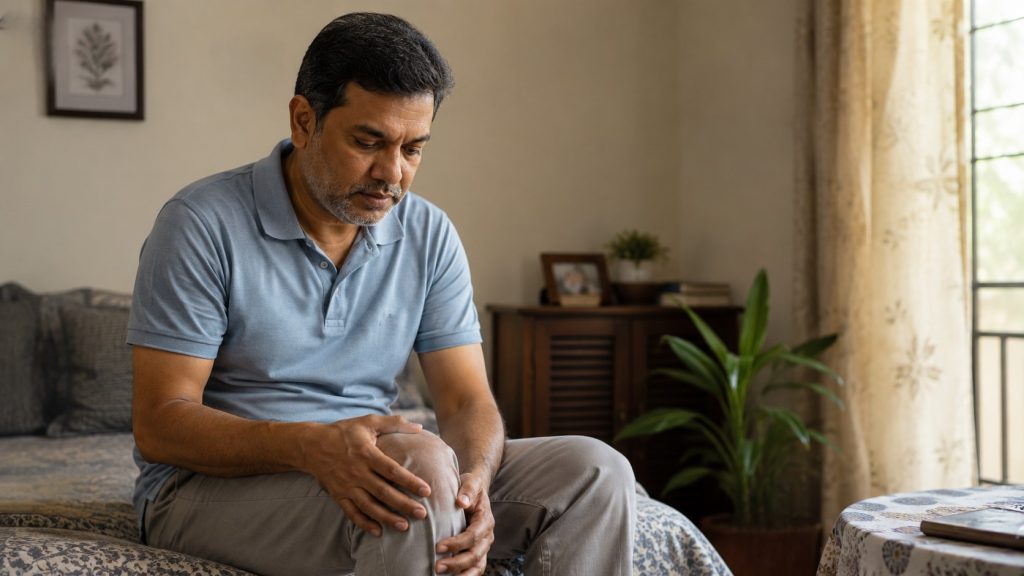
ACRT BD | মিঃ শামসুল হক নাদিম, একজন রিজেনারেটিভ থেরাপি প্র্যাকটিশনার | বারিধারা ডিওএইচএস, গুলশান, ঢাকা যে ব্যথা কিছুতেই সারছে না, সেটা সত্যিই ক্লান্তিকর। কয়েক মাস ব্যথানাশক খেলেন। একটু কমল, কিন্তু পেটের সমস্যা শুরু হলো। কেউ বললেন অপারেশন করতে হবে। কিন্তু অপারেশনের ঝুঁকি ভাবলে ভয় লাগছে, আর মন থেকে মানছেন না যে এটাই একমাত্র পথ। সত্যি কথা হলো, বেশিরভাগ দীর্ঘস্থায়ী মাংসপেশি ও হাড়ের ব্যথার ক্ষেত্রে অপারেশন প্রথম সমাধান না। এবং ২০২৬ সালে এসে অস্ত্রোপচার ছাড়া চিকিৎসার বিকল্পগুলো অনেক উন্নত হয়েছে। এই লেখায় জানবেন কোন চিকিৎসা আসলে কাজ করে, বিজ্ঞান কী বলছে, এবং আপনার ব্যথার ধরন অনুযায়ী কোনটা আপনার জন্য সঠিক। দীর্ঘস্থায়ী ব্যথা মানে কী? ৩ মাসের বেশি সময় ধরে ব্যথা থাকলে সেটাকে “দীর্ঘস্থায়ী” বা ক্রনিক ব্যথা বলা হয়। এই পর্যায়ে আসলে আমাদের স্নায়ুতন্ত্র ব্যথার সংকেতের চারপাশে নিজেকে নতুন করে সাজিয়ে নেয়। মূল আঘাত হয়তো সেরে গেছে, কিন্তু ব্যথা যেন রয়েই গেছে। সাধারণ যে কারণগুলোতে ক্রনিক ব্যথা হয়: এই সমস্যাগুলোতে রিজেনারেটিভ চিকিৎসা ভালো কাজ করে। বেশিরভাগ ক্ষেত্রেই অপারেশনের দরকার হয় না। দরকার হয় সঠিক সময়ে সঠিক চিকিৎসা। মানুষ কেন এত দিন ব্যথায় থাকেন দীর্ঘস্থায়ী ব্যথায় আক্রান্ত বেশিরভাগ মানুষ একটা চেনা পথেই হাঁটেন: ১. ব্যথানাশক বা প্রদাহরোধী ওষুধ খান২. বিশ্রাম নেন, কিছুটা ভালো লাগে কিন্তু ব্যথা ফিরে আসে৩. কিছুটা ফিজিওথেরাপি করান, অনিয়মিতভাবে৪. হতাশ হয়ে অপারেশনের কথা ভাবেন৫. অপারেশনের ভয়ে পিছিয়ে যান, ব্যথায় আটকে থাকেন সমস্যা এই না যে চিকিৎসা নেই। সমস্যা হলো অনেকেই নতুন বিকল্পগুলোর কথা জানেন না, অথবা শুনেছেন যে অপারেশনই একমাত্র সমাধান। সেটা ঠিক না। ২০২৬ সালে অস্ত্রোপচার ছাড়া দীর্ঘস্থায়ী ব্যথার সেরা চিকিৎসাগুলো ১. ফোকাসড শকওয়েভ থেরাপি (FSWT) এই মুহূর্তে মাংসপেশি ও হাড়ের ব্যথার জন্য সবচেয়ে কার্যকর অস্ত্রোপচারবিহীন চিকিৎসাগুলোর একটি। শকওয়েভ থেরাপিতে ক্ষতিগ্রস্ত টিস্যুর গভীরে ফোকাসড শব্দতরঙ্গ পাঠানো হয়। এই তরঙ্গ শরীরের নিজস্ব সারিয়ে তোলার প্রক্রিয়াকে সক্রিয় করে। রক্তচলাচল বাড়ে, পুরনো ক্ষতচিহ্ন ভাঙতে শুরু করে, কোলাজেন তৈরি হয়। টিস্যু নিজেই নিজেকে সারাতে শুরু করে। বিশেষভাবে কার্যকর: প্লান্টার ফ্যাসাইটিস এবং ক্যালসিফিক টেন্ডিনাইটিসে ফোকাসড শকওয়েভ থেরাপিতে ৭০ থেকে ৮০ শতাংশ রোগী উপকার পান বলে গবেষণায় দেখা গেছে। প্রতিটি সেশন লাগে ২০-৩০ মিনিট। বেশিরভাগ রোগীর ৩ থেকে ৬টি সেশন লাগে। সেশনের পরই স্বাভাবিক কাজে ফিরতে পারবেন, কোনো বিশ্রামের দরকার নেই। ACRT BD তে আমরা মাংসপেশির সমস্যার জন্য বিশেষভাবে তৈরি মেডিকেল-গ্রেড যন্ত্রপাতি দিয়ে এক্সট্রাকর্পোরিয়াল ফোকাসড শকওয়েভ থেরাপি দিয়ে থাকি। ২. প্লেটলেট-রিচ প্লাজমা (PRP) থেরাপি PRP আপনার নিজের রক্ত ব্যবহার করে আপনার শরীরকেই সারায়। অল্প পরিমাণ রক্ত নিয়ে সেন্ট্রিফিউজ মেশিনে হিলিং প্লেটলেট আলাদা করা হয়। তারপর সেটা সরাসরি ব্যথার জায়গায় ইনজেকশন দেওয়া হয়। প্লেটলেটে গ্রোথ ফ্যাক্টর থাকে। এই গ্রোথ ফ্যাক্টর টিস্যু মেরামত করে, প্রদাহ কমায়, আর ক্ষতিগ্রস্ত জায়গায় নতুন রক্তনালী তৈরিতে সাহায্য করে। বিশেষভাবে কার্যকর: একাধিক ক্লিনিকাল ট্রায়ালে দেখা গেছে, হাঁটুর অস্টিওআর্থ্রাইটিসে PRP স্টেরয়েড ইনজেকশনের চেয়ে ৬ থেকে ১২ মাসে বেশি কার্যকর। স্টেরয়েড সাময়িকভাবে ব্যথা কমায়, কিন্তু দীর্ঘমেয়াদে কার্টিলেজের ক্ষতি করতে পারে। PRP বরং আসল টিস্যু পুনরুদ্ধারে সাহায্য করে। সাধারণত ১ থেকে ৩টি সেশন লাগে। বেশিরভাগ রোগী ৪ থেকে ৮ সপ্তাহের মধ্যে পার্থক্য টের পান। ACRT BD-তে PRP থেরাপি সম্পর্কে আরো জানুন। ৩. টেকার রেডিওফ্রিকোয়েন্সি থেরাপি TECAR (Transfer of Energy Capacitive and Resistive) একটি ডিপ-টিস্যু থেরাপি যা বৈদ্যুতিক শক্তি ব্যবহার করে টিস্যুকে ভেতর থেকে গরম করে। হিটিং প্যাড শুধু ত্বকের উপরটা গরম করে। কিন্তু TECAR শক্তি মাংসপেশি, টেন্ডন এবং জয়েন্টের গভীরে পৌঁছায়। এতে স্থানীয় রক্তচলাচল বাড়ে, সেলুলার মেটাবলিজম দ্রুত হয়, টিস্যু সেরে ওঠার গতি বাড়ে। কার্যকর ক্ষেত্র: TECAR প্রায়ই ম্যানুয়াল থেরাপি বা ব্যায়ামের সাথে মিলিয়ে দেওয়া হয়। ব্যথাহীন, অস্ত্রোপচারবিহীন। সেশনের সময় বেশিরভাগ রোগীই উষ্ণ আরামদায়ক অনুভূতির কথা বলেন। ACRT BD-তে টেকার রেডিওফ্রিকোয়েন্সি থেরাপি সম্পর্কে জানুন। ৪. ভিসকোসাপ্লিমেন্টেশন (হায়ালুরনিক এসিড ইনজেকশন) বিশেষভাবে হাঁটুর অস্টিওআর্থ্রাইটিসের জন্য এটি জানা দরকার। হাঁটুর জয়েন্টে স্বাভাবিকভাবে সাইনোভিয়াল ফ্লুইড থাকে, যা লুব্রিকেন্ট ও শক অ্যাবজর্বার হিসেবে কাজ করে। অস্টিওআর্থ্রাইটিসে এই ফ্লুইড পাতলা হয়ে যায়। ভিসকোসাপ্লিমেন্টেশনে হায়ালুরনিক এসিড ইনজেকশন দিয়ে সেই ঘাটতি পূরণ করা হয়। হালকা থেকে মাঝারি মাত্রার হাঁটুর OA-তে অনেক রোগী এক কোর্স চিকিৎসায় ৬ মাস থেকে এক বছর পর্যন্ত উল্লেখযোগ্য ব্যথামুক্তি অনুভব করেন। বিশেষ উপযোগী যখন: হাঁটু ও গোড়ালির ব্যথার চিকিৎসা নিয়ে আরো বিস্তারিত জানতে আমাদের হাঁটুর অস্টিওআর্থ্রাইটিস এবং গোড়ালির ব্যথার চিকিৎসা লেখাটি পড়ুন। ভিসকোসাপ্লিমেন্টেশন পেজে বিস্তারিত তথ্য আছে। ৫. সুনির্দিষ্ট ফিজিওথেরাপি ও এক্সারসাইজ রিহ্যাবিলিটেশন এটা শুনতে সাধারণ মনে হলেও এটি ভিত্তি। সঠিকভাবে, নিয়মিত করা ফিজিওথেরাপি দীর্ঘস্থায়ী ব্যথার জন্য এখনও অন্যতম প্রমাণিত চিকিৎসা। মূল কথাটা হলো “সুনির্দিষ্ট।” ইন্টারনেটে পাওয়া র্যান্ডম ব্যায়াম আর আপনার নির্দিষ্ট সমস্যা, নড়াচড়ার ধরন ও পেশির ঘাটতি বুঝে তৈরি পুনর্বাসন প্রোগ্রাম এক জিনিস না। কোমর ব্যথা, হিপের অস্টিওআর্থ্রাইটিস, কাঁধের সমস্যার জন্য সুনির্দিষ্ট ৮-১২ সপ্তাহের ব্যায়াম প্রোগ্রাম ৪০ থেকে ৬০ শতাংশ ব্যথা কমাতে পারে। শকওয়েভ বা টেকার থেরাপির সাথে মিলিয়ে দিলে ফলাফল আরো ভালো হয়। একনজরে তুলনা চিকিৎসা সবচেয়ে কার্যকর সেশন সংখ্যা বিশ্রামের প্রয়োজন ফোকাসড শকওয়েভ থেরাপি টেন্ডনের ব্যথা, গোড়ালি, ক্যালসিফিকেশন ৩-৬ নেই PRP থেরাপি হাঁটু OA, টেন্ডন ও লিগামেন্টের সমস্যা ১-৩ সামান্য (১-২ দিন) TECAR রেডিওফ্রিকোয়েন্সি মাংসপেশির ব্যথা, জড়তা, পুনর্বাসন ৫-১০ নেই ভিসকোসাপ্লিমেন্টেশন হাঁটুর OA ১-৩ নেই ফিজিওথেরাপি সব ধরনের ব্যথা (ভিত্তি হিসেবে) ১২-২৪ নেই ব্যথানাশক ও স্টেরয়েড ইনজেকশনের কথা ব্যথানাশক (ibuprofen বা naproxen জাতীয় ওষুধ) প্রদাহ কমায় এবং সাময়িকভাবে ব্যথা নিয়ন্ত্রণ করে। এটা চিকিৎসা না। মূল সমস্যা সমাধান করে না। দীর্ঘদিন এই ওষুধ খেলে পেটের আলসার, কিডনির চাপ ও হৃদরোগের ঝুঁকি বাড়তে পারে। কর্টিকোস্টেরয়েড ইনজেকশনেও একই কথা: দ্রুত আরাম মেলে, কিন্তু টিস্যু মেরামত হয় না। বারবার নিলে টেন্ডন ও কার্টিলেজ আরো দুর্বল হয়ে যেতে পারে। স্বল্পমেয়াদে ব্যথা সামলাতে এগুলো কাজে লাগে, কিন্তু দীর্ঘস্থায়ী ব্যথার স্থায়ী সমাধান এগুলো না। কখন সত্যিই অপারেশন দরকার হয়? কিছু পরিস্থিতিতে অপারেশন করতেই হয়: কিন্তু বেশিরভাগ দীর্ঘস্থায়ী ব্যথার রোগীর ক্ষেত্রে এই অবস্থাগুলো হয় না। অনেক ক্ষেত্রেই সময়ের আগে অপারেশন করা হচ্ছে, কারণ রোগীরা বিকল্পগুলো সম্পর্কে জানেন না। ঢাকায় দীর্ঘস্থায়ী ব্যথার চিকিৎসা: বাস্তব চিত্র বাংলাদেশে ক্রনিক ব্যথা অনেক সাধারণ সমস্যা, কিন্তু ভালো চিকিৎসার সুযোগ ঐতিহাসিকভাবে সীমিত ছিল। বেশিরভাগ ক্ষেত্রে বিকল্প ছিল ব্যথানাশক, সাধারণ ফিজিওথেরাপি বা অপারেশন। সেটা এখন বদলাচ্ছে। ঢাকার গুলশান, বারিধারা ডিওএইচএস-এ ACRT BD তে এখন উপরে উল্লেখিত সব চিকিৎসাই এক ছাদের নিচে পাওয়া যায়। এখানে চিকিৎসা দেন মি. শামসুল হক নাদিম, একজন সার্টিফাইড রিজেনারেটিভ থেরাপি প্র্যাকটিশনার (BPT, ঢাকা বিশ্ববিদ্যালয়; ISMST সার্টিফাইড), যার মাংসপেশি ও হাড়ের সমস্যায় ১০ বছরের ক্লিনিকাল অভিজ্ঞতা রয়েছে। ঢাকার কাছাকাছি দীর্ঘস্থায়ী ব্যথার চিকিৎসার বিকল্পগুলো নিয়ে বিস্তারিত জানতে আমাদের দীর্ঘমেয়াদি ব্যথার চিকিৎসা লেখাটি পড়ুন। আপনার ব্যথার জন্য সঠিক চিকিৎসা কীভাবে বেছে নেবেন সহজ করে বললে: টেন্ডনে বা গোড়ালিতে ব্যথা? ফোকাসড শকওয়েভ থেরাপি দিয়ে শুরু করুন। এই ধরনের সমস্যায় সবচেয়ে প্রমাণিত। হাঁটুর অস্টিওআর্থ্রাইটিস ও জয়েন্টে জড়তা? সমস্যার তীব্রতা অনুযায়ী
Regenerative Therapy vs Surgery: Which Is Right for You?
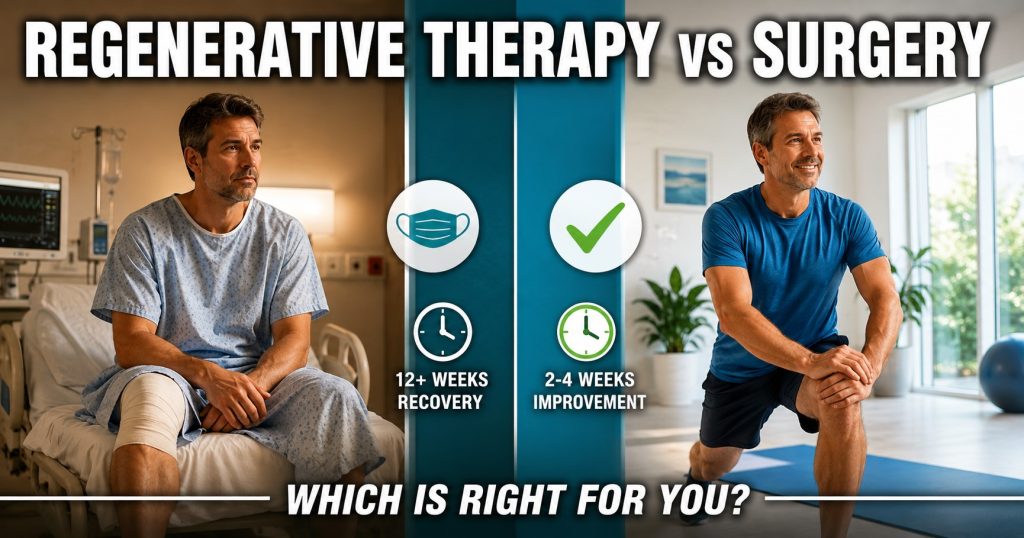
When you have pain in your joints, muscles, or other parts of your body, your first thought might be surgery. But surgery isn’t the only option anymore. There’s something newer called regenerative therapy that can help heal your body without cutting it open. But which one should you choose? Let’s break it down in a way that makes sense. What Is Surgery? Surgery is when a doctor cuts your body open to fix the problem. If you have a torn ligament, damaged cartilage, or a bad joint, surgery tries to repair or replace the damaged part. After surgery, your body needs time to heal, and you might have pain, swelling, or complications. Some people do need surgery. It can work well for serious injuries or when nothing else has worked. But surgery comes with risks like infection, bleeding, or problems from anesthesia. You’ll also spend weeks or months recovering. What Is Regenerative Therapy? Regenerative therapy is different. Instead of cutting you open, doctors use your body’s own healing power to fix damaged tissue. At ACRT BD, we offer several regenerative treatment options that work without surgery. The most common types are: Platelet-Rich Plasma (PRP): Doctors take a small amount of your blood, spin it to separate the healing parts, and inject it back into the damaged area. Your body’s own repair cells go to work. Shockwave Therapy: Sound waves are sent to the damaged area. These waves trigger your body’s natural healing response and increase blood flow. Stem Cell Therapy: Your body’s “blank slate” cells are guided to become healthy tissue that replaces the damaged part. All of these work with your body, not against it. There’s no cutting, no big recovery time, and no major risks. How Are They Different? Time to Feel Better Pain During Recovery Cost Risks How Long It Takes to Work When Should You Choose Surgery? Surgery is the right choice if: When Should You Choose Regenerative Therapy? Regenerative therapy is the right choice if: Can You Try Regenerative Therapy First? Yes, and many doctors recommend it. If you start with regenerative therapy and it doesn’t work after several months, you can always have surgery later. Your body will still be in good condition for surgery if you need it. But if you start with surgery, you can’t go back. The surgery changes your tissue, and regenerative therapy becomes harder or impossible to do later. This is why lots of people try regenerative therapy first. It’s less risky, less painful, and cheaper. And if it works, you save yourself from surgery altogether. What Problems Can Regenerative Therapy Help? Regenerative therapy has helped people with: If you have a specific problem, a doctor at a regenerative therapy clinic can tell you if it might help you. For men’s health issues specifically, non-surgical ED treatment options have shown excellent results. Real Talk: What Makes Sense for You? Here’s the simple truth: regenerative therapy is safer, faster, and less painful than surgery. It’s also cheaper when you add up all the costs. But you need to understand that results come slower. You won’t wake up from one treatment completely healed. Your body needs weeks or months to repair itself. Surgery works faster, but you pay for that speed with pain, recovery time, and risk. The best choice depends on: Talk to an Expert The truth is, only a doctor who knows your specific problem can tell you which choice is right for you. What works for one person might not work for another. A regenerative therapy expert can look at your injury, run some tests, and tell you if regenerative therapy can help or if you really do need surgery. At ACRT BD in Dhaka, we help people understand both options. We’re experts in regenerative therapy, but we’re honest about what will and won’t work. If surgery is what you really need, we’ll tell you. The good news? Most people find that regenerative therapy works for them. And the best part is waking up after just a few weeks with less pain and a body that’s healing itself. Your Next Step If you want to know which option is right for your specific problem, book a consultation. We can walk through your injury, explain what regenerative therapy can and can’t do, and help you make the choice that makes sense for your life.
আপনার জন্য কোনটি সঠিক: রিজেনারেটিভ থেরাপি নাকি অপারেশন?
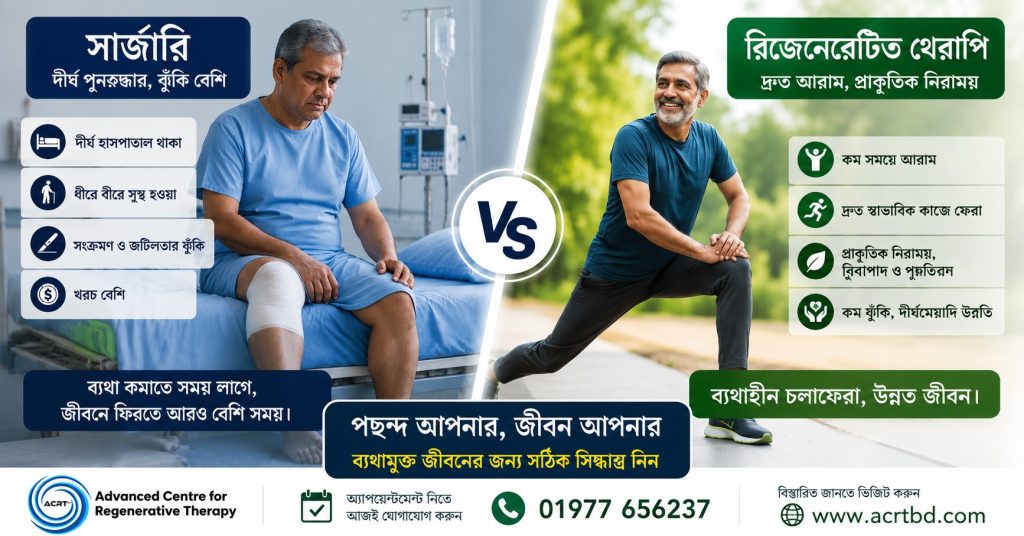
আপনার জয়েন্ট, মাংসপেশি বা শরীরের অন্য কোনো জায়গায় ব্যথা হলে অনেকের প্রথম চিন্তা হয় অপারেশন। কিন্তু আর অপারেশনই একমাত্র রাস্তা নয়। এখন একটি নতুন পদ্ধতি আছে যার নাম রিজেনারেটিভ থেরাপি। এটি আপনার শরীরকে কাটাকাটি ছাড়াই সুস্থ করে তোলে। কিন্তু আপনি কোনটি বেছে নেবেন? আসুন একটি সহজ উপায়ে বুঝি। অপারেশন কী? অপারেশন হলো যখন একজন ডাক্তার আপনার শরীর খুলে ক্ষতিগ্রস্ত অংশ ঠিক করে। যদি আপনার লিগামেন্ট ছিঁড়া থাকে বা কার্টিলেজ নষ্ট হয়, তাহলে অপারেশন সেই ক্ষতিগ্রস্ত অংশ মেরামত বা প্রতিস্থাপন করার চেষ্টা করে। অপারেশনের পর আপনার শরীরকে সুস্থ হতে সময় লাগে। আপনি ব্যথা, ফোলাভাব বা জটিলতা অনুভব করতে পারেন। অনেক মানুষের অপারেশনের প্রয়োজন আছে। গুরুতর আঘাতের জন্য বা অন্য কোনো পদ্ধতি কাজ না করলে এটি ভালো কাজ করতে পারে। কিন্তু অপারেশনের ঝুঁকি আছে, যেমন সংক্রমণ, রক্তপাত বা অ্যানেস্থেসিয়ার সমস্যা। সুস্থ হতে কয়েক সপ্তাহ বা মাস লাগে। রিজেনারেটিভ থেরাপি কী? রিজেনারেটিভ থেরাপি ভিন্ন। এখানে ডাক্তার আপনার শরীর খোলেন না। বরং তারা আপনার শরীরের নিজস্ব নিরাময় শক্তি ব্যবহার করে ক্ষতিগ্রস্ত টিস্যু মেরামত করে। ACRT BD-তে আমরা অপারেশন ছাড়াই কাজ করে এমন বিভিন্ন চিকিৎসা বিকল্প অফার করি। সবচেয়ে সাধারণ ধরনগুলি হল: প্ল্যাটেলেট-রিচ প্লাজমা (PRP): ডাক্তার আপনার রক্তের একটি ছোট অংশ নেন, তা কেন্দ্রীভূত করে নিরাময়কারী অংশগুলি আলাদা করেন এবং আবার ক্ষতিগ্রস্ত এলাকায় ইনজেক্ট করেন। আপনার শরীরের নিজস্ব মেরামত কোষগুলি কাজ শুরু করে। শকওয়েভ থেরাপি: শব্দ তরঙ্গ ক্ষতিগ্রস্ত এলাকায় পাঠানো হয়। এই তরঙ্গ আপনার শরীরের প্রাকৃতিক নিরাময় প্রক্রিয়া শুরু করে এবং রক্ত প্রবাহ বাড়ায়। স্টেম সেল থেরাপি: আপনার শরীরের “খালি ক্যানভাস” কোষগুলি স্বাস্থ্যকর টিস্যুতে পরিণত হয় যা ক্ষতিগ্রস্ত অংশ প্রতিস্থাপন করে। এই সবগুলি আপনার শরীরের সাথে কাজ করে, তার বিরুদ্ধে নয়। কোনো কাটাকাটি নেই, কোনো বড় পুনরুদ্ধার সময় নেই এবং কোনো বড় ঝুঁকি নেই। এগুলি কীভাবে ভিন্ন? ভালো বোধ করতে কত সময় লাগে? পুনরুদ্ধারের সময় ব্যথা খরচ ঝুঁকি কতক্ষণ সময় লাগে কাজ করতে? কখন আপনার অপারেশন করানো উচিত? অপারেশন সঠিক যখন: কখন আপনার রিজেনারেটিভ থেরাপি করানো উচিত? রিজেনারেটিভ থেরাপি সঠিক যখন: কি আপনি রিজেনারেটিভ থেরাপি প্রথমে চেষ্টা করতে পারেন? হ্যাঁ, এবং অনেক ডাক্তার এটি সুপারিশ করেন। যদি আপনি রিজেনারেটিভ থেরাপি দিয়ে শুরু করেন এবং কয়েক মাসের পর এটি কাজ না করে, তাহলে আপনি পরে সবসময় অপারেশন করাতে পারেন। আপনার শরীর এখনও অপারেশনের জন্য ভালো অবস্থায় থাকবে। কিন্তু যদি আপনি অপারেশন দিয়ে শুরু করেন, তাহলে আপনি ফিরে যেতে পারবেন না। অপারেশন আপনার টিস্যু পরিবর্তন করে এবং পরে রিজেনারেটিভ থেরাপি কঠিন বা অসম্ভব হয়ে ওঠে। এই কারণেই অনেক মানুষ রিজেনারেটিভ থেরাপি প্রথমে চেষ্টা করে। এটি কম ঝুঁকিপূর্ণ, কম ব্যথাকর এবং সস্তা। এবং যদি এটি কাজ করে, তাহলে আপনি নিজেকে সম্পূর্ণ অপারেশন থেকে বাঁচান। রিজেনারেটিভ থেরাপি কী সমস্যা সাহায্য করতে পারে? রিজেনারেটিভ থেরাপি মানুষকে সাহায্য করেছে: আপনার যদি একটি নির্দিষ্ট সমস্যা থাকে, তাহলে একটি রিজেনারেটিভ থেরাপি ক্লিনিকে একজন ডাক্তার আপনাকে বলতে পারবেন যে এটি আপনাকে সাহায্য করতে পারে কিনা। পুরুষদের স্বাস্থ্য সমস্যার জন্য বিশেষভাবে, অপারেশনমুক্ত স্তম্ভন দুর্বলতা চিকিৎসার বিকল্প চমৎকার ফলাফল দেখিয়েছে। সত্যি কথা: আপনার জন্য কী বোঝায়? এখানে সরল সত্য: রিজেনারেটিভ থেরাপি অপারেশনের চেয়ে নিরাপদ, দ্রুত এবং কম ব্যথাকর। এটি সবকিছু যোগ করলে সস্তাও। কিন্তু আপনাকে বুঝতে হবে যে ফলাফল ধীরে আসে। একটি চিকিৎসার পর আপনি সম্পূর্ণভাবে সুস্থ জেগে উঠবেন না। আপনার শরীরের সপ্তাহ বা মাস নিরাময়ের জন্য প্রয়োজন। অপারেশন দ্রুত কাজ করে, কিন্তু আপনি সেই গতির জন্য ব্যথা, পুনরুদ্ধার সময় এবং ঝুঁকির দাম দেন। সেরা পছন্দ এর উপর নির্ভর করে: একজন বিশেষজ্ঞের সাথে কথা বলুন সত্য হলো, শুধুমাত্র একজন ডাক্তার যিনি আপনার নির্দিষ্ট সমস্যা জানেন, তিনিই আপনাকে বলতে পারবেন কোনটি আপনার জন্য সঠিক। এক ব্যক্তির জন্য যা কাজ করে তা অন্য কোনো ব্যক্তির জন্য নাও কাজ করতে পারে। একজন রিজেনারেটিভ থেরাপি বিশেষজ্ঞ আপনার আঘাত দেখতে পারেন, কিছু পরীক্ষা করতে পারেন এবং আপনাকে বলতে পারেন রিজেনারেটিভ থেরাপি সাহায্য করতে পারে কিনা বা আপনার সত্যিই অপারেশনের প্রয়োজন আছে কিনা। ঢাকায় ACRT BD-তে, আমরা মানুষকে উভয় বিকল্প বুঝতে সাহায্য করি। আমরা রিজেনারেটিভ থেরাপিতে বিশেষজ্ঞ, কিন্তু আমরা সৎ থাকি যে কী কাজ করবে এবং কী করবে না। যদি অপারেশনই আপনার সত্যিকারের প্রয়োজন হয়, আমরা আপনাকে বলব। ভালো খবর? বেশিরভাগ মানুষ খুঁজে পায় যে রিজেনারেটিভ থেরাপি তাদের জন্য কাজ করে। এবং সেরা অংশ হল কয়েক সপ্তাহ পর জেগে ওঠা কম ব্যথা এবং একটি শরীর যা নিজেই নিরাময় হচ্ছে। আপনার পরবর্তী ধাপ যদি আপনি জানতে চান যে আপনার নির্দিষ্ট সমস্যার জন্য কোনটি সঠিক, তাহলে একটি পরামর্শ বুক করুন। আমরা আপনার আঘাত সম্পর্কে কথা বলতে পারি, ব্যাখ্যা করতে পারি রিজেনারেটিভ থেরাপি কী করতে পারে এবং কী পারে না, এবং আপনার জীবনের জন্য বোঝা সিদ্ধান্ত নিতে সাহায্য করতে পারি।
Morning Erections and ED After 40: What Your Symptoms Are Telling You

You wake up hard most mornings. But when it actually matters, in bed with your partner, nothing happens, or it happens and fades too fast to finish what you started. If that sounds familiar, you’ve probably already searched for an answer and found a wall of generic advice: eat better, reduce stress, try a pill. None of it explains the one detail that’s actually telling you something important: the fact that you still wake up with an erection at all. That detail matters more than most articles let on. It’s one of the simplest, most useful clues a man has for figuring out what’s actually going wrong, and it’s worth understanding before you decide what to do next. Book a Consultation: https://acrtbd.com/contact/ Why Morning Erections Happen in the First Place Morning erections have nothing to do with what you’re dreaming about or whether you woke up thinking about sex. They’re called nocturnal penile tumescence, and they happen automatically several times a night during REM sleep, whether you remember them or not. Your brain, nerves, and blood vessels run a kind of overnight maintenance check, and a firm morning erection is basically a sign that the plumbing and wiring involved in an erection are working. This is exactly why doctors ask about it. If the equipment works fine on its own at 5 AM, but doesn’t respond on command later that day, the problem probably isn’t your blood vessels or nerves. If mornings have gone quiet too, that’s a different story, and it usually points somewhere else. Two Different Problems That Look the Same From Outside Erectile dysfunction isn’t one condition with one cause. Broadly, it splits into two categories, and knowing which one you’re dealing with changes everything about how it should be treated. Psychogenic ED is driven by what’s going on in your head: stress, anxiety, depression, relationship tension, or performance pressure. The physical hardware is fine. Morning erections usually keep happening because your subconscious brain, mostly disconnected from whatever anxiety hits you when a partner is in the room, still runs the same nightly maintenance cycle. This type tends to show up suddenly, often tied to a specific event or period of stress, and it can vary a lot day to day, working fine one night and not the next. Vasculogenic or nerve-related ED is a hardware problem. Something is interfering with blood flow to the penis, or with the nerve signals that trigger an erection, or both. This is the type that tends to develop gradually, gets worse over months or years, and comes with morning erections fading or disappearing entirely, because the same vascular or nerve issue that stops you in bed also stops the automatic overnight response. Psychogenic ED Vasculogenic / Nerve ED Onset Often sudden, tied to stress or a specific event Gradual, worsens over time Morning erections Usually still present Often reduced or absent Consistency Varies day to day More consistently affected Common triggers Anxiety, depression, relationship stress, performance pressure Diabetes, cardiovascular disease, low testosterone, smoking, nerve damage Typical first approach Counseling, stress management, sometimes short-term medication Address underlying vascular or hormonal cause, medication, or regenerative treatment This isn’t a formal diagnostic tool, and plenty of men have some overlap of both. But it’s a genuinely useful starting point, and it mirrors the kind of questions a urologist or andrologist will actually ask you. The Three Questions a Doctor Will Actually Ask According to the American Urological Association’s clinical guideline on erectile dysfunction, assessment starts with a focused history before jumping to any treatment. In practice, three questions tend to matter more than the rest: Did it start suddenly, or has it been getting worse slowly? Sudden onset with no recent injury or surgery leans toward a psychological trigger. Gradual decline leans toward a physical cause. Do you still wake up with an erection? This is the nocturnal penile tumescence check described above, and it’s often the single most useful piece of information in the whole conversation. When you do get hard, how firm is it, firm enough for penetration, or not quite there? Partial rigidity that never fully resolves points more toward blood flow issues than a purely psychological block. None of this replaces an actual exam. But walking into a consultation already able to answer these three questions saves time and gets you to the right treatment faster. Why ED Becomes More Common After 40 ED isn’t an inevitable part of aging, but the odds do shift, and there’s a real physiological reason for it. After 40, several things tend to happen at once: blood vessels gradually lose some elasticity, cardiovascular risk factors like high blood pressure and cholesterol become more common, testosterone levels drift downward for many men, and conditions like type 2 diabetes, which damages small blood vessels and nerves, become more prevalent. This is also where ED stops being purely a sexual health issue. The National Institute of Diabetes and Digestive and Kidney Diseases and other major health bodies have pointed to erectile dysfunction as an early warning sign for cardiovascular disease in some men, since the small blood vessels in the penis can show signs of trouble before larger vessels elsewhere in the body do. That’s not meant to alarm you. It’s meant to explain why a doctor investigating your ED might also check your blood pressure, blood sugar, and cholesterol, because the same vascular changes tend to affect multiple systems at once. If you’re noticing ED symptoms for the first time in your 40s, especially alongside reduced morning erections, that overlap with cardiovascular and metabolic health is worth taking seriously, not as a scare tactic, but as a genuinely useful reason to get checked properly rather than just picking up a prescription and moving on. Our detailed breakdown of ED causes and the Bangladesh-specific factors that tend to come up in local patients go deeper into this. Medication vs. Shockwave Therapy: What Each One Actually Does This is where a lot of men get stuck, because
সকালের ইরেকশন আর ৪০ এর পর ED: আপনার শরীর কী বলতে চাইছে

প্রায় প্রতিদিন সকালেই আপনার ইরেকশন হয়। কিন্তু যখন আসলে দরকার, সঙ্গীর সাথে বিছানায়, তখন কিছুই হয় না, অথবা হলেও শেষ করার আগেই মিলিয়ে যায়। এই কথাগুলো পরিচিত লাগলে, আপনি নিশ্চয়ই ইতিমধ্যে অনলাইনে খুঁজেছেন এবং সাধারণ কিছু পরামর্শের মুখোমুখি হয়েছেন: ভালো খাবার খান, স্ট্রেস কমান, একটা ট্যাবলেট ট্রাই করুন। কিন্তু এসবের কোনোটাই সেই একটা জিনিস ব্যাখ্যা করে না যা আসলে গুরুত্বপূর্ণ কিছু বলছে: আপনার এখনো সকালে ইরেকশন হচ্ছে, এই তথ্যটাই। এই ছোট্ট তথ্যটা যতটা গুরুত্বপূর্ণ, বেশিরভাগ আর্টিকেল ততটা গুরুত্ব দেয় না। এটা একজন পুরুষের হাতে থাকা সবচেয়ে সহজ ও কাজের একটা সূত্র, যা দিয়ে বোঝা যায় আসলে কী সমস্যা হচ্ছে, এবং পরের পদক্ষেপ ঠিক করার আগে এটা বোঝা দরকার। Book a Consultation: https://acrtbd.com/contact/ সকালে ইরেকশন কেন হয়? সকালের ইরেকশনের সাথে আপনি স্বপ্নে কী দেখছেন বা ঘুম থেকে উঠে যৌনতা নিয়ে ভাবছেন কিনা, তার কোনো সম্পর্ক নেই। একে বলা হয় nocturnal penile tumescence, এবং এটা রাতে REM ঘুমের সময় স্বয়ংক্রিয়ভাবে কয়েকবার ঘটে, আপনার মনে থাকুক বা না থাকুক। আপনার মস্তিষ্ক, স্নায়ু আর রক্তনালী মিলে রাতভর একধরনের রক্ষণাবেক্ষণ চেক চালায়, আর সকালে শক্ত ইরেকশন হওয়া মানে হলো ইরেকশনের সাথে জড়িত সিস্টেম ঠিকঠাক কাজ করছে। এই কারণেই ডাক্তাররা এই প্রশ্নটা করেন। যদি সকাল ৫টায় নিজে থেকেই সব ঠিকঠাক কাজ করে, কিন্তু পরে দরকারের সময় সাড়া না দেয়, তাহলে সমস্যাটা সম্ভবত রক্তনালী বা স্নায়ুর নয়। আর সকালেও যদি কিছু না হয়, তাহলে গল্পটা ভিন্ন, এবং এটা সাধারণত অন্য কোনো দিকে ইঙ্গিত করে। বাইরে থেকে একরকম দেখতে হলেও, দুটো ভিন্ন সমস্যা ইরেকটাইল ডিসফাংশন একটামাত্র কারণে হওয়া একটামাত্র রোগ নয়। মোটাদাগে এটা দুই ভাগে ভাগ করা যায়, আর কোনটা আপনার হচ্ছে সেটা জানলেই চিকিৎসার পুরো পথটা বদলে যায়। Psychogenic ED হয় মানসিক কারণে: স্ট্রেস, উদ্বেগ, বিষণ্নতা, সম্পর্কের টানাপোড়েন, বা পারফরম্যান্স নিয়ে চাপ। শারীরিক দিক থেকে সব ঠিক আছে। সকালের ইরেকশন সাধারণত চলতেই থাকে, কারণ আপনার সাবকনশাস মস্তিষ্ক, যা সঙ্গীর সামনে যে উদ্বেগ হয় তার থেকে অনেকটাই আলাদা থাকে, একই রাতের রক্ষণাবেক্ষণ চক্র চালিয়ে যায়। এই ধরনের সমস্যা সাধারণত হঠাৎ শুরু হয়, প্রায়ই কোনো নির্দিষ্ট ঘটনা বা স্ট্রেসফুল সময়ের সাথে জড়িত, আর দিনে দিনে ওঠানামা করে, একদিন ঠিক থাকে তো আরেকদিন হয় না। Vascular বা স্নায়ুজনিত ED একটা শারীরিক সমস্যা। কোনোকিছু পুরুষাঙ্গে রক্ত চলাচলে বাধা দিচ্ছে, অথবা ইরেকশন শুরু করার স্নায়ু সংকেতে সমস্যা করছে, অথবা দুটোই। এই ধরনের সমস্যা সাধারণত ধীরে ধীরে তৈরি হয়, মাস বা বছরের ব্যবধানে খারাপ হতে থাকে, আর সকালের ইরেকশনও কমে যায় বা পুরোপুরি বন্ধ হয়ে যায়, কারণ যে ভাস্কুলার বা স্নায়ুর সমস্যা বিছানায় বাধা দিচ্ছে, সেটাই স্বয়ংক্রিয় রাতের সাড়াও বন্ধ করে দেয়। Psychogenic ED Vascular / স্নায়ুজনিত ED শুরু হওয়ার ধরন সাধারণত হঠাৎ, স্ট্রেস বা নির্দিষ্ট ঘটনার সাথে জড়িত ধীরে ধীরে, সময়ের সাথে খারাপ হয় সকালের ইরেকশন সাধারণত থাকে কমে যায় বা থাকে না ধারাবাহিকতা দিনে দিনে ওঠানামা করে তুলনামূলকভাবে ধারাবাহিকভাবে প্রভাবিত হয় সাধারণ কারণ উদ্বেগ, বিষণ্নতা, সম্পর্কের চাপ, পারফরম্যান্স চাপ ডায়াবেটিস, কার্ডিওভাসকুলার রোগ, কম টেস্টোস্টেরন, ধূমপান, স্নায়ুর ক্ষতি সাধারণ প্রথম পদ্ধতি কাউন্সেলিং, স্ট্রেস ম্যানেজমেন্ট, কখনো কখনো স্বল্পমেয়াদী ওষুধ মূল ভাস্কুলার বা হরমোনাল কারণ সমাধান, ওষুধ, বা রিজেনারেটিভ চিকিৎসা এটা কোনো আনুষ্ঠানিক ডায়াগনস্টিক টুল নয়, আর অনেক পুরুষের ক্ষেত্রেই দুটোর মিশ্রণ থাকতে পারে। কিন্তু এটা শুরু করার জন্য প্রকৃতই কাজের একটা জায়গা, এবং একজন ইউরোলজিস্ট বা অ্যান্ড্রোলজিস্ট আসলেই যে প্রশ্নগুলো করবেন তার সাথে এটা মিলে যায়। ডাক্তার যে ৩টি প্রশ্ন করবেন American Urological Association-র ক্লিনিক্যাল গাইডলাইন অনুযায়ী, ED-র মূল্যায়ন শুরু হয় কোনো চিকিৎসা শুরুর আগে একটা ফোকাসড হিস্ট্রি নেওয়া দিয়ে। বাস্তবে, বাকিগুলোর চেয়ে তিনটা প্রশ্ন বেশি গুরুত্বপূর্ণ হয়ে দাঁড়ায়: হঠাৎ শুরু হয়েছে, নাকি ধীরে ধীরে খারাপ হয়েছে? সাম্প্রতিক কোনো ইনজুরি বা সার্জারি ছাড়া হঠাৎ শুরু হলে সেটা মানসিক কারণের দিকে ইঙ্গিত করে। ধীরে ধীরে খারাপ হলে সেটা শারীরিক কারণের দিকে ইঙ্গিত করে। এখনো কি সকালে ইরেকশন নিয়ে ঘুম ভাঙে? এটাই উপরে বর্ণিত nocturnal penile tumescence চেক, এবং পুরো আলোচনায় এটাই প্রায়ই সবচেয়ে কাজের তথ্য হয়ে দাঁড়ায়। যখন হয়, তখন কতটা শক্ত থাকে, সহবাসের জন্য যথেষ্ট শক্ত, নাকি ঠিক পুরোপুরি না? যে আংশিক শক্ততা কখনো পুরোপুরি সমাধান হয় না, সেটা বিশুদ্ধ মানসিক বাধার চেয়ে রক্ত চলাচলের সমস্যার দিকে বেশি ইঙ্গিত করে। এসব কোনোভাবেই আসল পরীক্ষার বিকল্প নয়। কিন্তু কনসালটেশনে যাওয়ার আগে এই তিনটা প্রশ্নের উত্তর জানা থাকলে সময় বাঁচে আর দ্রুত সঠিক চিকিৎসায় পৌঁছানো যায়। ৪০ এর পর ED কেন বেশি দেখা যায়? ED বয়স বাড়ার অনিবার্য অংশ নয়, কিন্তু সম্ভাবনা বদলায়, আর এর পেছনে একটা সত্যিকারের শারীরবৃত্তীয় কারণ আছে। ৪০ এর পর, একসাথে বেশ কিছু জিনিস ঘটতে থাকে: রক্তনালী ধীরে ধীরে কিছুটা স্থিতিস্থাপকতা হারায়, উচ্চ রক্তচাপ ও কোলেস্টেরলের মতো কার্ডিওভাসকুলার ঝুঁকির বিষয়গুলো বেশি দেখা যায়, অনেক পুরুষের ক্ষেত্রেই টেস্টোস্টেরনের মাত্রা ধীরে ধীরে কমতে থাকে, আর টাইপ ২ ডায়াবেটিসের মতো অবস্থা, যা ছোট রক্তনালী ও স্নায়ুর ক্ষতি করে, বেশি দেখা যায়। এখানেই ED শুধু যৌন স্বাস্থ্যের সমস্যা থাকে না। National Institute of Diabetes and Digestive and Kidney Diseases (NIDDK) এবং অন্যান্য প্রধান স্বাস্থ্য সংস্থা কিছু পুরুষের ক্ষেত্রে ইরেকটাইল ডিসফাংশনকে কার্ডিওভাসকুলার রোগের একটা প্রাথমিক সতর্কসংকেত হিসেবে চিহ্নিত করেছে, কারণ পুরুষাঙ্গের ছোট রক্তনালীগুলোতে শরীরের অন্য বড় রক্তনালীর আগেই সমস্যার লক্ষণ দেখা দিতে পারে। এটা ভয় দেখানোর জন্য বলা হচ্ছে না। বরং এটা বোঝানোর জন্য যে, একজন ডাক্তার আপনার ED পরীক্ষা করার সময় রক্তচাপ, রক্তে শর্করা, আর কোলেস্টেরলও চেক করতে পারেন, কারণ একই ভাস্কুলার পরিবর্তন একসাথে একাধিক সিস্টেমকে প্রভাবিত করে। ৪০-এর ঘরে প্রথমবার ED-র লক্ষণ লক্ষ্য করলে, বিশেষত সকালের ইরেকশন কমে যাওয়ার সাথে সাথে, কার্ডিওভাসকুলার ও মেটাবলিক স্বাস্থ্যের সাথে এই সম্পর্কটা গুরুত্ব সহকারে নেওয়া দরকার, ভয় পাওয়ার জন্য নয়, বরং শুধু একটা প্রেসক্রিপশন নিয়ে এগিয়ে যাওয়ার বদলে সঠিকভাবে চেকআপ করানোর একটা প্রকৃত কারণ হিসেবে। ED-র কারণ নিয়ে আমাদের বিস্তারিত আলোচনা এবং ED-র লক্ষণসমূহ নিয়ে লেখা আর্টিকেলে এই বিষয়ে আরো গভীরে যাওয়া হয়েছে। ওষুধ বনাম শকওয়েভ থেরাপি: প্রতিটি আসলে কী করে? এখানেই অনেক পুরুষ আটকে যান, কারণ ওষুধ আর শকওয়েভ থেরাপিকে প্রতিদ্বন্দ্বী অপশন হিসেবে দেখানো হয়, অথচ বাস্তবে দুটো একেবারে আলাদা জিনিস করে। PDE5 ইনহিবিটর (পরিচিত ED ট্যাবলেটগুলো যে ক্যাটাগরিতে পড়ে) সাময়িকভাবে রক্তনালীর মাংসপেশি শিথিল করে কাজ করে, যার ফলে যৌন উদ্দীপনার সময় পুরুষাঙ্গে বেশি রক্ত প্রবাহিত হয়। এটা মূল কারণ ঠিক করে না। ওষুধ যতক্ষণ কার্যকর থাকে ততক্ষণ রক্ত প্রবাহে সহায়তা করে, তারপর প্রভাব কেটে যায়। Psychogenic ED-র জন্য, বা মূল কারণ সমাধানের সময় স্বল্পমেয়াদী সহায়তা হিসেবে, এটা প্রকৃতই কাজে লাগে। কিন্তু যে পুরুষের রক্তনালী নিজেই ক্ষতিগ্রস্ত বা দুর্বল, তার জন্য ওষুধ উপসর্গ সামলাচ্ছে, মূল প্রক্রিয়া নয়। Low-Intensity Extracorporeal Shockwave Therapy (Li-ESWT) ভিন্নভাবে কাজ করে। এতে
দীর্ঘমেয়াদি হাঁটু বা পায়ের গোড়ালির ব্যথা? অস্টিওআর্থাইটিস ও প্লান্টার ফ্যাসাইটিস আসলে চিকিৎসার ক্ষেত্রে কী বোঝায়
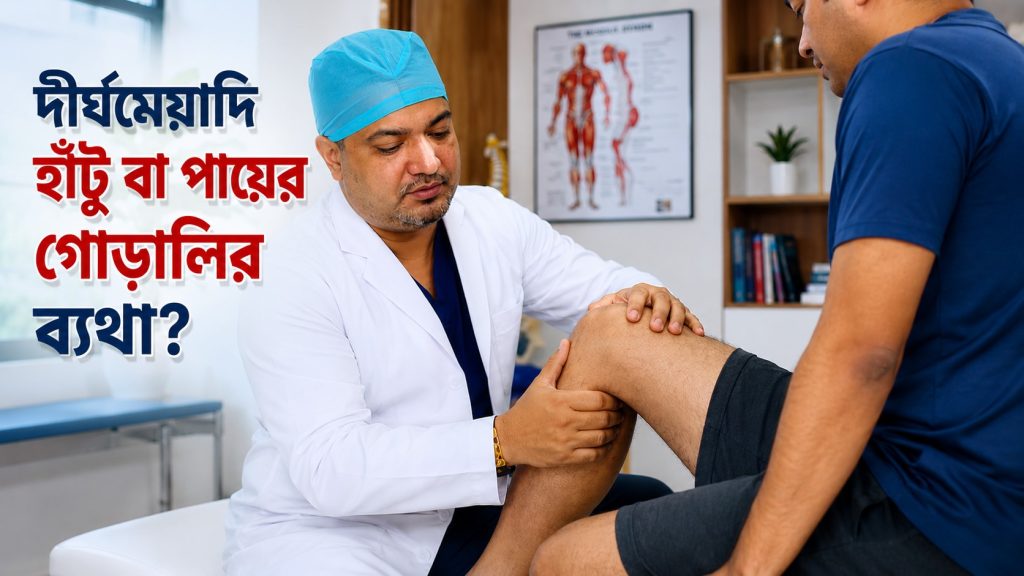
চেয়ার থেকে উঠতে গেলেই যদি হাঁটুতে ব্যথা করে, অথবা সকালে ঘুম থেকে উঠে পা ফ্লোরে ফেলার সাথে সাথে গোড়ালির নিচে তীব্র ব্যথা অনুভব করেন, তাহলে এটা আপনার কল্পনা নয়, আর শুধু “বয়স হচ্ছে” বলেও এড়িয়ে যাওয়ার বিষয় নয়। দীর্ঘমেয়াদি জয়েন্ট ও পায়ের ব্যথার সবচেয়ে সাধারণ দুটি কারণ হলো হাঁটুর অস্টিওআর্থাইটিস এবং প্লান্টার ফ্যাসাইটিস, আর দুটোরই আজকাল অনেক বেশি চিকিৎসা বিকল্প রয়েছে যা বেশিরভাগ মানুষ জানেন না। হাঁটুর অস্টিওআর্থাইটিস কেন হয় আপনার হাঁটুর জয়েন্ট কার্টিলেজ বা তরুণাস্থি দিয়ে ঢাকা থাকে, একটি নরম ও মসৃণ টিস্যু যা হাড়গুলোকে ঘর্ষণ ছাড়াই একে অপরের সাথে নড়াচড়া করতে সাহায্য করে। অস্টিওআর্থাইটিস তখন হয় যখন এই কার্টিলেজ ধীরে ধীরে ক্ষয় হতে থাকে। এটা যত পাতলা ও অমসৃণ হয়, জয়েন্ট তার মসৃণ নড়াচড়ার ক্ষমতা তত হারায়, আর চলাফেরায় ব্যথা শুরু হয়, কখনো কখনো দৃশ্যমান ফোলাভাবসহ। সময়ের সাথে এই ক্ষয়ের পেছনে কয়েকটি কারণ কাজ করে: কীভাবে বুঝবেন হাঁটুর অস্টিওআর্থাইটিস হয়েছে সাধারণ লক্ষণগুলোর মধ্যে আছে হাঁটুতে ব্যথা ও ফোলাভাব, জয়েন্টে হাত রাখলে গরম অনুভূত হওয়া, হাঁটু পুরোপুরি ভাঁজ করতে কষ্ট হওয়ার মতো শক্ত ভাব, স্কোয়াট থেকে উঠতে বা সিঁড়ি ব্যবহারে সমস্যা, এবং আরও গুরুতর ক্ষেত্রে জয়েন্টের আকৃতি পরিবর্তন বা নড়াচড়ার সময় কটকট শব্দ। গোড়ালির ব্যথা ও প্লান্টার ফ্যাসাইটিস: আরেকটি সাধারণ কারণ হাঁটুর ব্যথা যদি হয় ক্ষয়প্রাপ্ত কার্টিলেজের বিষয়, তাহলে গোড়ালির ব্যথা সাধারণত একটি অতিরিক্ত পরিশ্রান্ত লিগামেন্টের বিষয়। প্লান্টার ফ্যাসিয়া একটি মোটা টিস্যুর ব্যান্ড যা পায়ের নিচ দিয়ে বিস্তৃত থাকে, গোড়ালির হাড়কে পায়ের আঙুলের সাথে সংযুক্ত করে। এটা একটি শক শোষকের মতো কাজ করে এবং প্রতিটি পদক্ষেপে পায়ের আর্চকে সাপোর্ট দেয়। প্লান্টার ফ্যাসাইটিস তখন হয় যখন এই টিস্যু অতিরিক্ত স্ট্রেচ বা ব্যবহৃত হয়, যার ফলে গোড়ালির হাড়ের সাথে সংযুক্ত স্থানের কাছে ছোট ছোট টিয়ার ও প্রদাহ তৈরি হয়। এটা অত্যন্ত সাধারণ একটি সমস্যা, বিশ্বব্যাপী জনসংখ্যার ১০ শতাংশেরও বেশি মানুষ এতে আক্রান্ত হন এবং এটি গোড়ালি ব্যথার সবচেয়ে সাধারণ কারণ হিসেবে বিবেচিত। যা সাধারণত এর কারণ হয়: কীভাবে বুঝবেন: সাধারণ লক্ষণগুলো হলো গোড়ালির ব্যথা, আর্চ বা গোড়ালিতে স্থানীয় কোমলতা, ব্যায়ামের পরে ব্যথা, সকালে প্রথম কয়েক পা হাঁটার সময় ব্যথা, এবং ছুরিকাঘাতের মতো তীব্র ব্যথা। সকালে প্রথম পা ফেলার সময়ের এই ব্যথাটাই সাধারণত মানুষ সবার আগে বর্ণনা করেন, কারণ রাতভর টিস্যু শক্ত হয়ে যায় এবং দাঁড়ানোর সাথে সাথেই আবার স্ট্রেচ হয়। কারো কারো ক্ষেত্রে প্লান্টার ফ্যাসাইটিসের পাশাপাশি গোড়ালির হাড়ে একটি হাড়ের বৃদ্ধি তৈরি হয়, যাকে ক্যালকেনিয়াল স্পার বলা হয়। হিল স্পারকে প্রায়ই ভুলভাবে গোড়ালি ব্যথার একমাত্র কারণ মনে করা হয়। এগুলো সাধারণ, কিন্তু আসলে প্লান্টার ফ্যাসিয়া ও পায়ের অন্যান্য মাংসপেশির টানার প্রতিক্রিয়ায় হাড়ের একটি প্রতিক্রিয়া মাত্র, আর প্রায়ই এটা নিজে থেকে কোনো ব্যথা তৈরি করে না। এই সমস্যাগুলোর জন্য শুধু বিশ্রাম কেন যথেষ্ট নয় প্লান্টার ফ্যাসাইটিসের প্রধান লক্ষণ হলো দীর্ঘমেয়াদি গোড়ালির ব্যথা, যা সাধারণত কার্যক্রমের সাথে বাড়ে এবং ঘুম থেকে উঠে প্রথম কয়েক পায়ের সময় সবচেয়ে খারাপ থাকে। বেশিরভাগ ক্ষেত্রেই প্রাথমিক পদ্ধতিতে ভালো সাড়া পাওয়া যায়, ৯০ শতাংশেরও বেশি রোগী প্রাথমিক চিকিৎসা পদ্ধতিতে সফলভাবে সুস্থ হতে পারেন, এবং কাফ ও প্লান্টার ফ্যাসিয়া স্ট্রেচিংয়ের কার্যকারিতার পক্ষে প্রমাণ রয়েছে, যদিও পুরোপুরি ব্যথা কমতে ছয় থেকে বারো মাস সময় লাগতে পারে। এখানেই বেশিরভাগ মানুষের জন্য একটি সমস্যা তৈরি হয়: সাধারণ বিশ্রাম, স্ট্রেচিং এবং ওভার-দ্য-কাউন্টার ব্যথানাশক প্রায়ই সাহায্য করে, কিন্তু ধীরে, এবং একটা নির্দিষ্ট সীমা পর্যন্তই। অস্টিওআর্থাইটিসের ক্ষেত্রে, উল্লেখযোগ্যভাবে ক্ষয় হয়ে গেলে কার্টিলেজ নিজে থেকে পুনরায় তৈরি হয় না। প্লান্টার ফ্যাসাইটিসের ক্ষেত্রে যেটা স্ট্রেচিং ও বিশ্রাম সত্ত্বেও মাসের পর মাস ধরে চলছে, সেখানে সাধারণত আরও লক্ষ্যভিত্তিক কিছু দরকার হয় যা শুধু দৈনন্দিন ব্যথা ব্যবস্থাপনার বদলে প্রকৃত নিরাময়কে দ্রুততর করে। অস্ত্রোপচারবিহীন চিকিৎসার বিকল্প এখানেই রিজেনারেটিভ ও শকওয়েভ-ভিত্তিক থেরাপিগুলো কাজে আসে, যা “শুধু বিশ্রাম নিয়ে অপেক্ষা করা” এবং অস্ত্রোপচারের মাঝামাঝি একটি পথ তৈরি করে। এক্সট্রাকর্পোরিয়াল শকওয়েভ থেরাপি (ইএসডব্লিউটি) আক্রান্ত টিস্যুতে নিয়ন্ত্রিত শকওয়েভ প্রয়োগ করে। এই শকওয়েভ একটি মাইক্রোস্কোপিক ট্রমা তৈরি করে, যা শরীর থেকে একটি নিরাময় প্রতিক্রিয়া উদ্দীপিত করে বলে মনে করা হয়, যা প্লান্টার ফ্যাসিয়ার মতো টিস্যুতে নিরাময়ে সাহায্য করে। এটা সাধারণত প্লান্টার ফ্যাসাইটিস, টেনিস এলবো এবং অ্যাকিলিস টেনডিনাইটিসের জন্য ব্যবহৃত হয়। টেকার রেডিওফ্রিকোয়েন্সী গভীর টিস্যুতে তাপ তৈরি করতে রেডিওফ্রিকোয়েন্সী কারেন্ট ব্যবহার করে, দুটি মোডে: একটি সফট টিস্যুর জন্য, অন্যটি হাড় ও জয়েন্টের জন্য বেশি উপযুক্ত। এটা পেশি, টেনডন এবং জয়েন্টের ব্যথায় ব্যবহৃত হয় যেখানে গভীর টিস্যু উদ্দীপনা সাহায্য করে। প্লেটলেট-রিচ প্লাজমা (পিআরপি) আপনার নিজের রক্ত থেকে প্লেটলেট ঘনীভূত করে আক্রান্ত স্থানে ইনজেক্ট করে শরীরের প্রাকৃতিক নিরাময় প্রক্রিয়াকে উদ্দীপিত করে। এটা হাঁটুর অস্টিওআর্থাইটিসের মতো জয়েন্টের সমস্যা এবং সফট টিস্যু ইনজুরি উভয়ের জন্যই ব্যবহৃত হয়। ভিসকো সাপ্লিমেন্টেশন হায়ালুরোনিক অ্যাসিড ইনজেক্ট করে, যা আপনার জয়েন্টের প্রাকৃতিক লুব্রিক্যান্টের মতো একটি পদার্থ, সরাসরি হাঁটুতে, যা ঘর্ষণ কমায় এবং নড়াচড়া সহজ করে। এটা বিশেষভাবে হাঁটুর অস্টিওআর্থাইটিসের জন্য। এর কোনোটিতেই অস্ত্রোপচার বা হাসপাতালে ভর্তি হওয়ার প্রয়োজন নেই, আর এদের সবগুলোর পেছনের মূল ধারণা একই: শরীরের নিজস্ব নিরাময় প্রক্রিয়াকে (নতুন রক্তনালী তৈরি, নিয়ন্ত্রিত প্রদাহ, টিস্যু পুনর্গঠন) উদ্দীপিত করা, শুধু ব্যথা ঢেকে রাখা বা অস্ত্রোপচারের মাধ্যমে টিস্যু প্রতিস্থাপন করার বদলে। এই লক্ষণগুলো চিনতে পারলে কী করবেন যদি আপনি কয়েক মাস ধরে হাঁটু বা গোড়ালির ব্যথায় ভুগছেন এবং বিশ্রাম, বরফ, ও সাধারণ স্ট্রেচিংয়ে উন্নতি হচ্ছে না, তাহলে পরবর্তী পদক্ষেপ হলো একটি প্রকৃত রোগ নির্ণয় করানো, আরেকবার অনুমান নয়। একটি সঠিক মূল্যায়নে আপনার ইতিহাস দেখা হয়, জয়েন্ট বা পা সরাসরি পরীক্ষা করা হয়, এবং কিছু ক্ষেত্রে এক্সরে-এর মতো ইমেজিং ব্যবহার করে কোনো চিকিৎসা সুপারিশ করার আগে আসলে কী ঘটছে তা নিশ্চিত করা হয়। ঢাকার বারিধারা ডিওএইচএস, গুলশানে অবস্থিত অ্যাডভান্সড সেন্টার ফর রিজেনারেটিভ থেরাপি (এসিআরটি বিডি) হাঁটুর অস্টিওআর্থাইটিস এবং গোড়ালির ব্যথা উভয়েরই চিকিৎসা করে থাকে এক্সট্রাকর্পোরিয়াল শকওয়েভ থেরাপি, টেকার রেডিওফ্রিকোয়েন্সী, পিআরপি এবং ভিসকো সাপ্লিমেন্টেশনের মাধ্যমে, যার দায়িত্বে আছেন মি. শামসুল হক নাদিম, একজন ফিজিওথেরাপিস্ট (বিপিটি, ঢাকা বিশ্ববিদ্যালয়) এবং ইন্টারন্যাশনাল সোসাইটি অফ মেডিকেল শকওয়েভ ট্রিটমেন্ট (আইএসএমএসটি)-এর সার্টিফাইড সদস্য। নির্দিষ্ট চিকিৎসাগুলো সম্পর্কে আরও পড়ুন: সরাসরি হোয়াটসঅ্যাপে যোগাযোগ করুন 01977656237 নম্বরে কনসালটেশনের জন্য। আপনি সরাসরি চিকিৎসকের সাথে কথা বলবেন।
Chronic Knee or Heel Pain? What Osteoarthritis and Plantar Fasciitis Actually Mean for Treatment
If your knee aches every time you get up from a chair, or the bottom of your heel screams the moment your foot hits the floor in the morning, you’re not imagining it and you’re not just “getting older.” These are two of the most common causes of long-term joint and foot pain, osteoarthritis of the knee and plantar fasciitis, and both have a lot more treatment options today than most people realize. Osteoarthritis of the Knee: Why It Happens Your knee joint is cushioned by cartilage, a smooth, rubbery tissue that lets the bones glide against each other without friction. Osteoarthritis develops when that cartilage gradually wears down. As it thins and roughens, the joint loses its smooth glide, and movement starts to hurt, sometimes with visible swelling. A few things drive this wear over time: How to Recognize Knee Osteoarthritis Common signs include pain and swelling in the knee, warmth when you touch the joint, stiffness that makes it hard to bend the knee fully, difficulty getting up from a squat or using stairs, and in more advanced cases, a change in the joint’s shape or a grinding, clicking sensation during movement. Heel Pain and Plantar Fasciitis: The Other Common Culprit If knee pain is about worn cartilage, heel pain is usually about an overworked ligament. The plantar fascia is a thick band of tissue running along the bottom of your foot, connecting your heel bone to your toes. It acts like a shock absorber and supports your foot’s arch with every step you take. Plantar fasciitis develops when that tissue is overstretched or overused, leading to small tears and inflammation near where it attaches to the heel bone. It’s extremely common: <cite index=”16-1,16-2″>this inflammation happens when the plantar fascia is overstretched, with micro-tears also appearing from overuse and repetitive stress, and it’s the most common cause of heel pain worldwide, affecting more than 10% of the world’s population.</cite> What tends to cause it: How to recognize it: <cite index=”16-3″>The classic symptoms are heel pain, localized tenderness in the arch or heel, pain after exercise, pain with the first steps in the morning, and stabbing or sharp heel pain.</cite> That first-steps-in-the-morning pain is the detail most people describe first, since the tissue tightens overnight and gets stretched again the instant you stand. Some people also develop a bony growth on the heel bone alongside plantar fasciitis, sometimes called a calcaneal spur. <cite index=”23-3″>Heel spurs are often wrongly assumed to be the sole cause of heel pain. They’re common but are really just the bone’s response to pulling forces from the plantar fascia and other foot muscles, and often don’t cause pain on their own.</cite> Why These Conditions Need More Than Rest <cite index=”18-4″>The main symptom of plantar fasciitis is long-term heel pain that’s usually worse with activity and especially bad with the first few steps after getting up.</cite> Most cases do respond well to conservative approaches: <cite index=”18-2″>over 90 percent of patients with plantar fasciitis can be successfully treated with conservative treatment,</cite> and <cite index=”18-3″>stretching the calf and plantar fascia has evidence behind it, though it can take six to twelve months to fully ease the pain.</cite> That’s the catch for a lot of people: basic rest, stretching, and over-the-counter pain relief often help, but slowly, and only up to a point. For osteoarthritis, cartilage doesn’t regenerate on its own once it’s significantly worn. For plantar fasciitis that’s been dragging on for months despite stretching and rest, something more targeted is usually needed to actually speed up healing rather than just manage the pain day to day. Non-Surgical Treatment Options This is where regenerative and shockwave-based therapies come in, offering middle ground between “just rest and wait” and surgery. Extracorporeal Shockwave Therapy (ESWT) delivers controlled shockwaves to the affected tissue. <cite index=”23-4″>The shock waves create microscopic trauma, which triggers a healing response from the body, a process thought to help promote healing in tissue like the plantar fascia.</cite> It’s commonly used for plantar fasciitis, tennis elbow, and Achilles tendinitis. TECAR Radiofrequency uses radiofrequency currents to generate heat deeper in the tissue, in two modes: one for soft tissue, one better suited to bone and joints. It’s used for muscle, tendon, and joint pain where deeper tissue stimulation helps. Platelet-Rich Plasma (PRP) concentrates platelets from your own blood and injects them into the injured area to stimulate the body’s natural repair process. It’s used for both joint conditions like knee osteoarthritis and soft tissue injuries. Viscosupplementation injects hyaluronic acid, a substance similar to your joint’s natural lubricant, directly into the knee to reduce friction and ease movement. This one is specific to knee osteoarthritis. None of these require surgery or hospital admission, and the underlying idea across all of them is the same: stimulate the body’s own repair mechanisms (new blood vessel formation, controlled inflammation, tissue regeneration) rather than only masking pain or replacing tissue surgically. What to Do If You Recognize These Symptoms If you’ve been dealing with knee pain or heel pain for a few months and it isn’t improving with rest, ice, and basic stretching, the next step is getting an actual diagnosis, not another round of guessing. A proper assessment looks at your history, examines the joint or foot directly, and in some cases uses imaging like X-rays to confirm what’s going on before recommending any treatment. Advanced Centre for Regenerative Therapy (ACRT BD) in Baridhara DOHS, Gulshan, Dhaka, treats both knee osteoarthritis and heel pain using Extracorporeal Shockwave Therapy, TECAR Radiofrequency, PRP, and Viscosupplementation, under the care of Mr. Shamsul Hoque Nadim, a physiotherapist (BPT, Dhaka University) and certified member of the International Society of Medical Shockwave Treatment (ISMST). Learn more about the specific treatments: Message ACRT BD directly on WhatsApp at 01977656237 for a consultation. You’ll be speaking with the practitioner directly.