
Most men notice something is off before they ever say it out loud. Maybe an erection isn’t quite as firm as it used to be. Maybe it takes longer to happen, or doesn’t last as long once things get going. It’s easy to brush this off as a bad night, stress, or just getting older. Sometimes that’s exactly what it is. But these small changes are also how erectile dysfunction usually starts, and catching it early makes a real difference in how it’s treated and what it might be telling you about your overall health.
This article walks through the early signs of erectile dysfunction (ED) that are worth paying attention to, how to tell a one-off from a pattern, and when it’s time to actually talk to a doctor instead of waiting it out.
Book a Consultation: https://acrtbd.com/contact/

What Counts as an “Early Sign” of ED?
Erectile dysfunction is generally defined as the consistent inability to get or keep an erection firm enough for satisfying sexual activity. The word “consistent” matters here. Every man has an off night at some point, and that alone isn’t ED.
Early signs are the smaller, easier-to-dismiss changes that show up before things become a consistent problem. They’re subtle by nature, which is exactly why they get ignored. A single rough night doesn’t mean much. A pattern that repeats over weeks or months does.
Physical Signs to Watch For
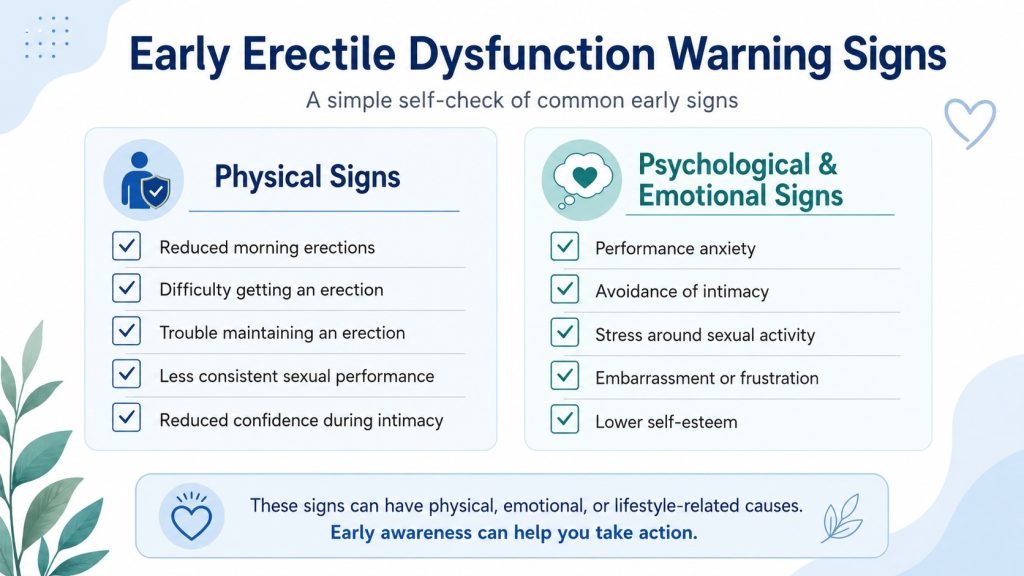
Reduced or Absent Morning Erections
Morning erections (sometimes called nocturnal erections, since they actually happen during sleep) are a normal part of healthy blood flow and testosterone function. They’re not something most men think about, until they stop happening as often.
A noticeable drop in how frequently you wake up with an erection can be an early signal that something with blood flow, hormones, or nerve function isn’t working the way it should. It’s not proof of ED on its own, but it’s worth noting if it becomes a consistent change rather than an occasional thing.
Difficulty Maintaining (Not Just Achieving) an Erection
People tend to think of ED as not being able to get an erection at all. In practice, one of the earliest and most common signs is the opposite problem: getting an erection without much trouble, but losing it partway through, before or during sex.
This kind of inconsistency is often one of the first things men notice, and one of the easiest to write off as “just an off day.” If it keeps happening, it’s not just an off day anymore.
Changes in Erection Firmness
Erections aren’t all-or-nothing. There’s a real difference between fully rigid and “good enough,” and a lot of men notice firmness gradually softening before they notice anything else. This can show up as needing more direct stimulation than before, or just sensing that things aren’t as firm as they used to be, even though everything still technically works.
Psychological and Emotional Signs
Performance Anxiety Before Intimacy
Once a man has one or two disappointing experiences, it’s common to start worrying about it happening again before sex even starts. That anxiety itself can interfere with getting or keeping an erection, which creates a frustrating cycle: worry leads to difficulty, and difficulty leads to more worry.
This is worth paying attention to because it can blur the line between a physical issue and a psychological one. In many cases, it’s a mix of both, which is part of why an early conversation with a doctor is more useful than trying to self-diagnose.
Avoidance of Sexual Situations
A less obvious sign is behavioral. Some men start finding reasons to avoid sex altogether rather than risk another disappointing experience. This might look like working late, claiming to be too tired, or generally pulling back from intimacy with a partner. If you notice yourself doing this and can connect it to worry about performance, that’s worth acknowledging rather than ignoring.
Book a Consultation: https://acrtbd.com/contact/
Lifestyle and Health-Related Early Indicators
Erectile function depends heavily on healthy blood flow, so it’s closely tied to cardiovascular health. Research has linked ED to several of the same risk factors associated with heart disease, including high blood pressure, high cholesterol, diabetes, and smoking. In some cases, ED symptoms show up before other signs of cardiovascular problems, which is one reason doctors sometimes treat new-onset ED as a signal to check heart health more broadly.
Other lifestyle factors that are commonly associated with early ED symptoms include:
- Chronic stress or poor sleep
- Excessive alcohol use
- Lack of physical activity
- Low testosterone levels
- Certain medications, including some antidepressants and blood pressure drugs
These are associations, not guarantees. Having one of these risk factors doesn’t mean you’ll develop ED, and not having them doesn’t rule it out. A doctor can help sort out which factors, if any, apply to your situation.
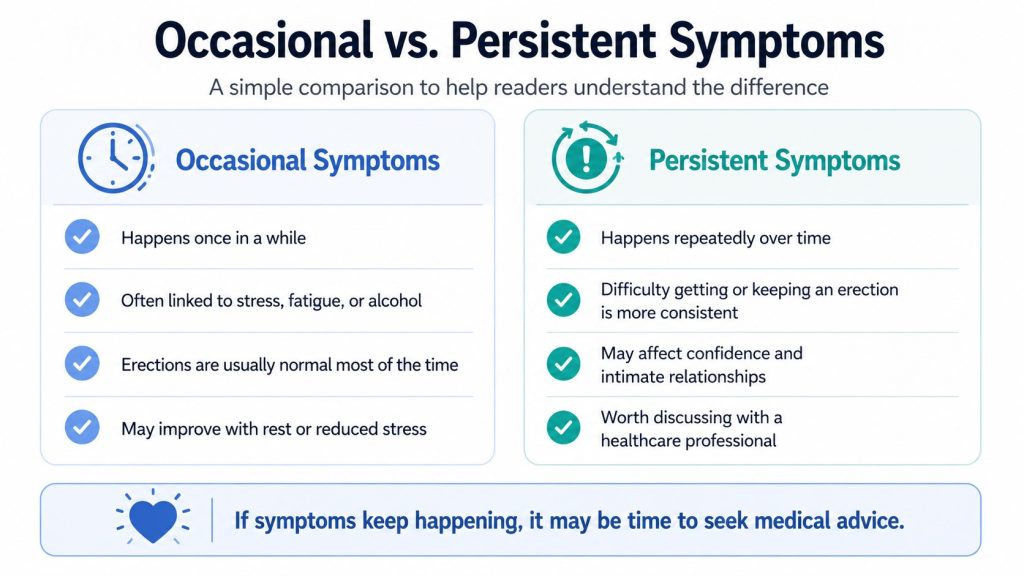
Occasional vs. Persistent Symptoms: How to Tell the Difference
This is the part most men get stuck on. Here’s a simple way to think about it.
| Occasional (Likely Not ED) | Persistent (Worth Checking Out) |
|---|---|
| Happens once or twice after a stressful day, heavy drinking, or poor sleep | Happens repeatedly over several weeks or months |
| Resolves on its own once the situation changes | Doesn’t improve even when stress, sleep, or alcohol use improve |
| Doesn’t affect confidence or willingness to be intimate | Starts to cause anxiety or avoidance around sex |
| No other new symptoms | Comes with other changes like low libido, fatigue, or mood changes |
If what you’re experiencing lines up more with the right column than the left, it’s a reasonable signal to take seriously rather than wait out.
Book a Consultation: https://acrtbd.com/contact/
Common Mistakes Men Make When Noticing Early Symptoms
- Assuming it’s “just stress” without checking. Stress can absolutely play a role, but assuming that’s the whole story can delay catching an underlying physical cause.
- Waiting too long to bring it up. Many men wait months or years before mentioning ED to a doctor, often out of embarrassment, even though early evaluation tends to lead to better outcomes.
- Self-treating with unverified supplements or products. Over-the-counter products marketed for ED are inconsistently regulated and can interact with other medications. It’s safer to get a proper evaluation first.
- Avoiding the topic with a partner. Silence tends to make the anxiety side of ED worse, not better. Talking about it, even briefly, often reduces the pressure that makes symptoms worse.
- Treating one bad night as a diagnosis. A single experience isn’t enough information to draw conclusions from. Patterns matter more than isolated incidents.
When to See a Doctor
If you’ve noticed a pattern of reduced or inconsistent erections over more than a few weeks, that’s a reasonable point to schedule an appointment. You should also see a doctor sooner if ED symptoms come with chest pain, shortness of breath, or other signs that might point to a cardiovascular issue, since these can indicate something more urgent than ED alone.
A doctor can run basic tests to check for underlying causes like blood pressure, blood sugar, cholesterol, and testosterone levels, and rule out medication side effects. This is a much more reliable starting point than trying to guess based on symptoms alone.
How ACRT BD Can Help
If you’re noticing some of these early signs and aren’t sure what they mean, getting clarity early is usually better than waiting. ACRT BD provides information and resources for men dealing with early-stage health concerns like this, and can help point you toward the right next step, whether that’s understanding your symptoms better or connecting with a qualified healthcare provider. You can learn more on the ACRT BD website at acrtbd.com.
Key Takeaways
- Subtle changes, like fewer morning erections or trouble maintaining firmness, are often the earliest signs of ED.
- Psychological signs, including performance anxiety and avoidance of intimacy, can show up alongside or even before physical symptoms.
- ED is closely linked to cardiovascular health, so new symptoms are worth mentioning to a doctor, not just managing on your own.
- A pattern over weeks or months is more meaningful than a single occurrence.
- Early evaluation tends to lead to better, faster solutions than waiting.
Frequently Asked Questions
Can erectile dysfunction be temporary?
Yes. Temporary ED is common and can be caused by stress, fatigue, alcohol, certain medications, or short-term health issues. If symptoms resolve once the underlying cause is addressed, it likely isn’t a chronic condition. Persistent symptoms over several weeks are more concerning than a one-time occurrence.
Is occasional difficulty getting an erection normal?
Yes, occasional difficulty is common and usually not a sign of a medical condition on its own. Stress, exhaustion, and alcohol can all cause a temporary dip in erectile function. It becomes more significant when it happens repeatedly or starts affecting your confidence and relationships.
What causes early-onset ED in younger men?
In younger men, ED is more often linked to psychological factors like anxiety, stress, or relationship issues, though physical causes such as poor cardiovascular health, smoking, or hormone imbalances can also play a role. A doctor can help identify which factors are involved rather than guessing.
Should I be worried if this only happens sometimes?
Not necessarily. Occasional symptoms tied to an identifiable cause, like a stressful week or too much alcohol, usually aren’t a major concern. It’s worth paying closer attention if the pattern continues even after those factors improve.
How is ED diagnosed?
A doctor typically starts with a physical exam, a review of your medical history and medications, and basic blood tests to check hormone levels, blood sugar, and cardiovascular markers. In some cases, additional tests may be recommended depending on what the initial results show.
Final Thoughts
Early signs of ED are easy to dismiss because they’re small and inconsistent at first. But that’s also exactly why they’re worth paying attention to. Catching a pattern early gives you more options and often points to underlying health issues worth addressing anyway, not just the symptom itself. If what you’ve read here sounds familiar, it’s worth having a real conversation with a healthcare provider rather than waiting to see if it goes away on its own. ACRT BD can be a helpful starting point if you’re trying to figure out what to do next.
Book a Consultation: https://acrtbd.com/contact/

3 Responses